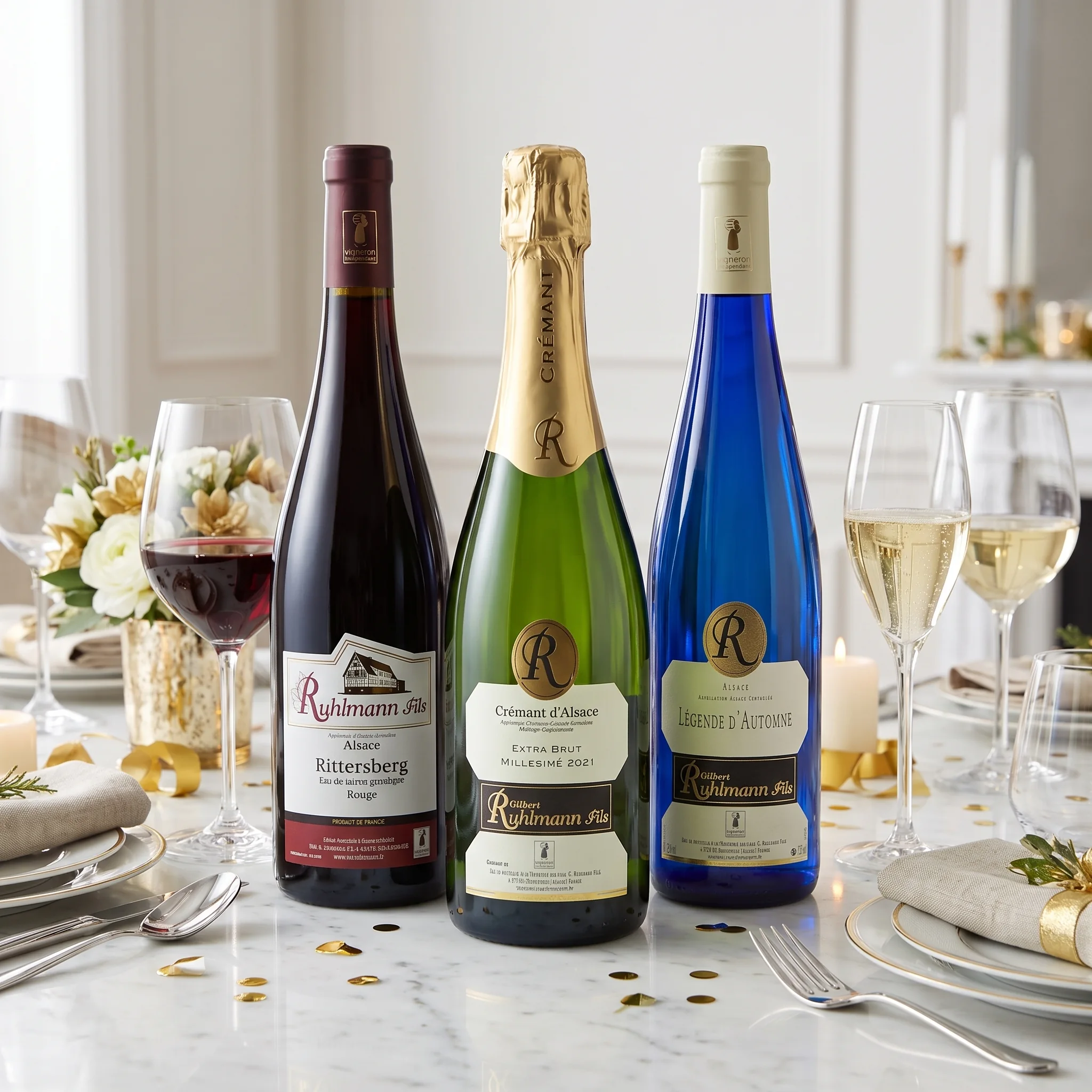
Christmas dinner is the culinary marathon of the year: the aperitif that goes on and on, the festive starters, the poultry, the cheese board, the Yule log. And at every stage, the same question: what do we open? You do not need a sommelier’s cellar to get it right. With four or five well-chosen bottles, you can cover the whole meal. That is what we suggest here, course by course, with the wines from our estate in Scherwiller.
The essentials in 30 seconds
- The aperitif: a Crémant d’Alsace, or the Crémant Extra-Brut if oysters are on the menu.
- The starters: the Pinot Gris with foie gras, a dry Riesling with seafood, the Crémant Rosé with smoked salmon.
- The main course: the Rittersberg Pinot Noir with poultry or game, the Riesling Vieilles Vignes with capon in a cream sauce.
- The cheeses: the Gewurztraminer with Munster, the Grand Cru Frankstein with Comté.
- Dessert: the Légende d’Automne, the Crémant Rosé or the Riesling Vendanges Tardives, depending on the Yule log.
The aperitif: bubbles, of course
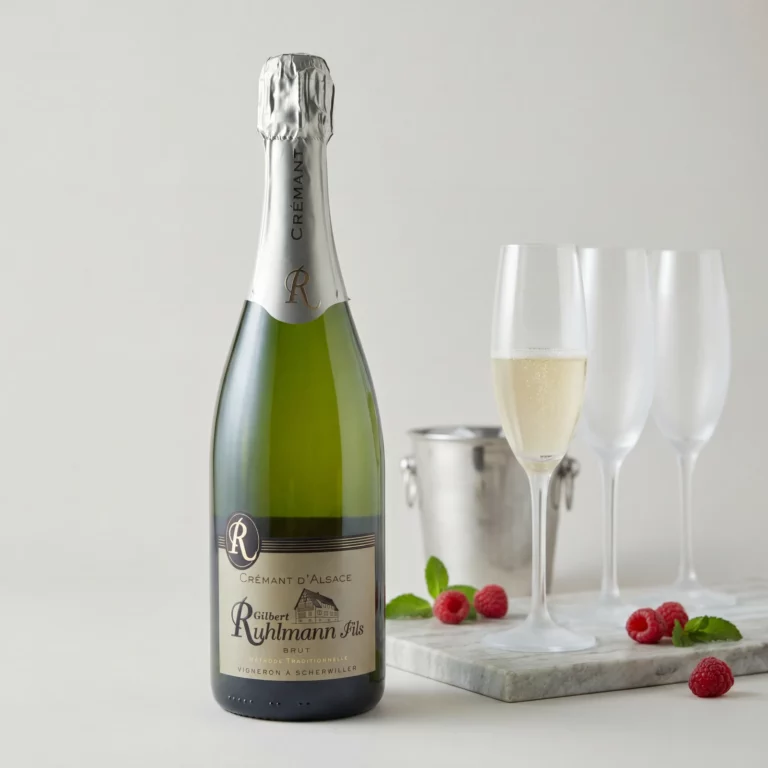
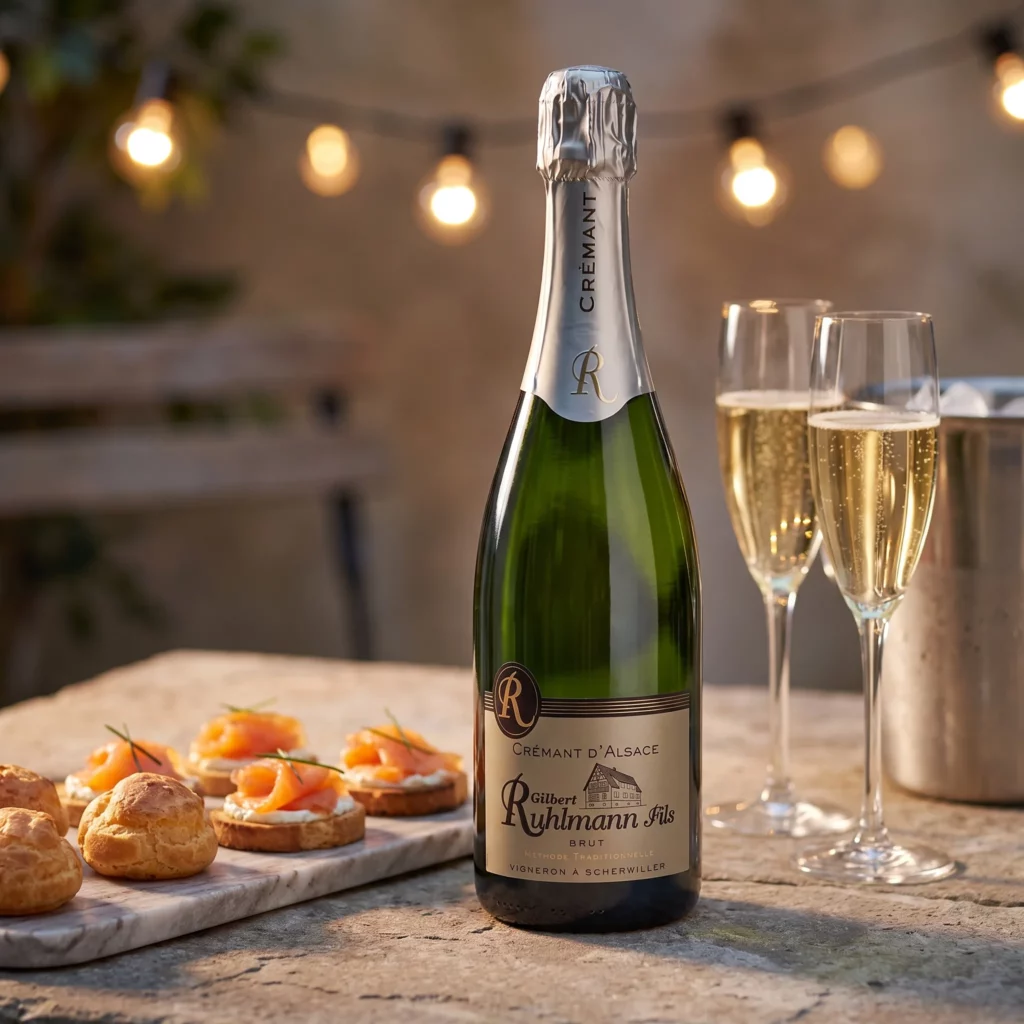
To open the meal, nothing beats a crémant. It wakes up the appetite without weighing you down, and it sets a festive mood straight away. Our brut Crémant d’Alsace is floral and fresh, with notes of peach: it goes with toasts, gougères and little puff pastries. The Crémant Extra-Brut, drier and more complex with its notes of brioche and toast, is perfect if the aperitif has a taste of the sea: oysters, salmon, blinis.
Prefer a still wine? Our Muscat, dry and very fruity, has that crisp grape flavour everyone likes. In Alsace, it is often served as an aperitif, with a slice of kougelhopf.
The winemaker’s tip
Crémant is served between 5 and 7 °C. Put the bottle in the fridge three hours beforehand, or twenty minutes in a bucket filled with water and ice. But never in the freezer: someone always forgets it, and the party bottle pays the price.
The starters: foie gras, oysters and salmon
This is often the most anticipated moment, and we have written two full articles about it. In short:
- Foie gras: our Pinot Gris if you want to keep things fresh, our Légende d’Automne for a sweet pairing. All the details in Which wine with foie gras?
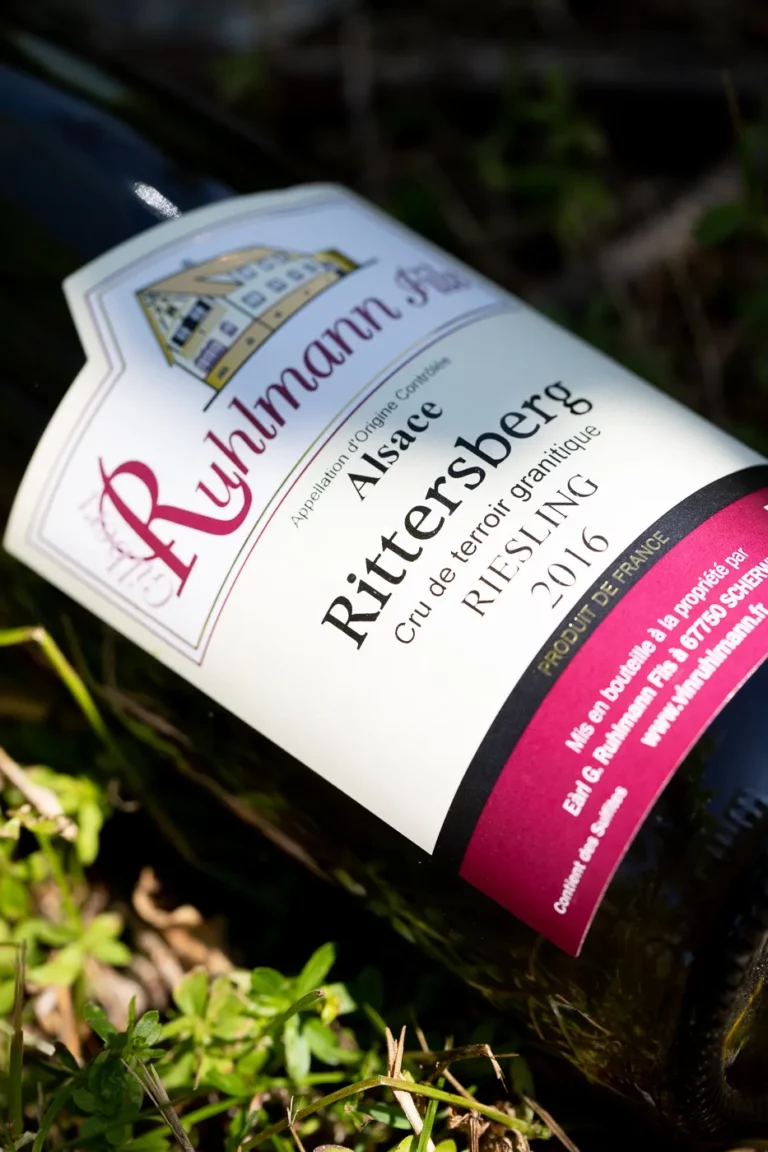
- Oysters and seafood: the Rittersberg Riesling or the Riesling Scherwiller. Read more in Which wine with oysters and seafood?
- Smoked salmon: the Crémant Rosé d’Alsace, with its raspberry notes and fine bubbles.
- Snails: our Sylvaner Vieilles Vignes, fresh and light, which is not overwhelmed by the garlic and parsley butter.
The main course: capon, turkey, duck or game
The Christmas main course is often poultry: capon, turkey, guinea fowl, duck. All of these go well with two kinds of wine: a fine red with gentle tannins, or a full-bodied white. The choice depends mainly on the sauce.
The festive red: our Rittersberg Pinot Noir
The Rittersberg Pinot Noir comes from the same granite lieu-dit as our Rittersberg Riesling, at the foot of Ortenbourg Castle. It is aged in 400 or 600 litre casks, which gives it more body and structure than a classic Alsace Pinot Noir. Ruby colour with purple glints, black fruit (blackcurrant, blackberry), silky tannins: it goes with guinea fowl, duck, roast capon and small game such as pheasant, partridge or hare. Serve it between 12 and 14 °C.
For a simpler meal, or a family turkey with chestnuts, our classic Pinot Noir, light and fruity, with cherry and red berries, does the job very well. Pinot Noir is the only red grape of Alsace, and it has just the finesse that does not overpower poultry.
The white: for poultry in a cream sauce
If your capon comes with a cream or morel sauce, a white wine is often a better match than a red. The Riesling Vieilles Vignes, full and medium-dry, goes very well with white meat, roasts and vol-au-vent.
With duck à l’orange, think Pinot Gris instead: our Pinot Gris or, for a special occasion, our Grand Cru Frankstein, a round, smoky and mineral Pinot Gris from the granite slopes of Dambach-la-Ville, 4 km from Scherwiller.
The cheese board: time for Alsace pairings
Cheese is often the poor relation of wine pairing. Out of habit, people keep the wine from the main course. Yet this is where Alsace has a few ideas.
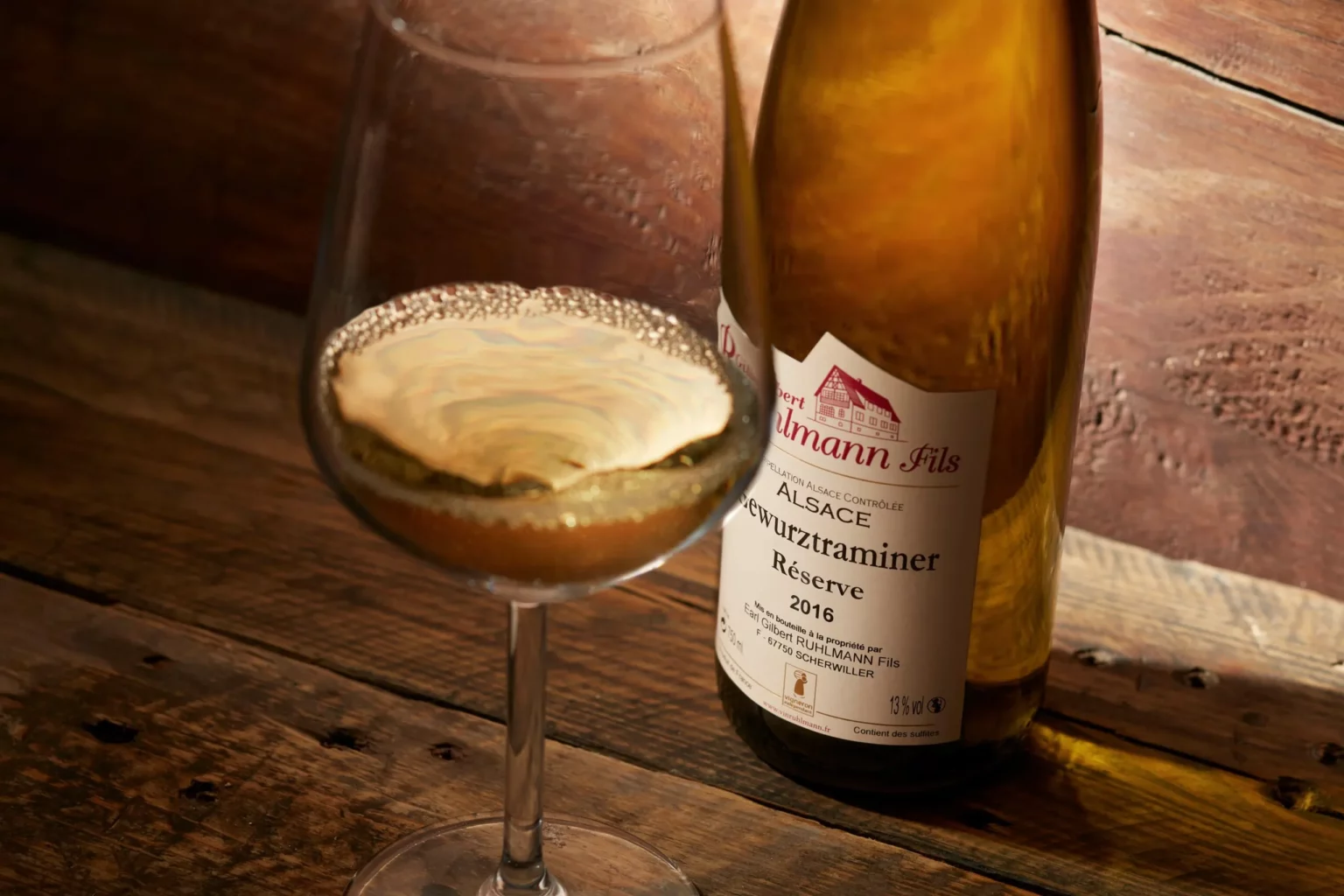
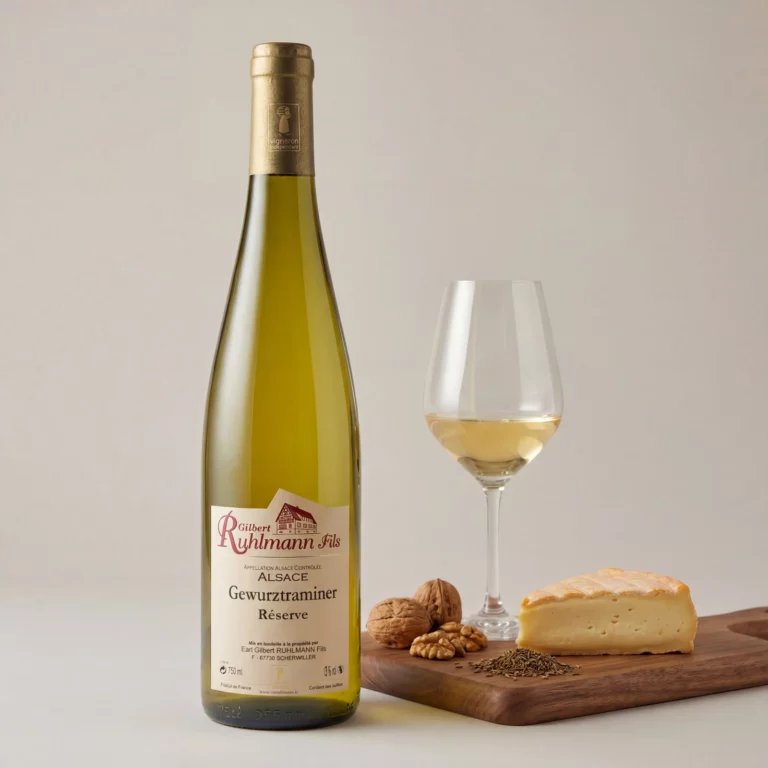
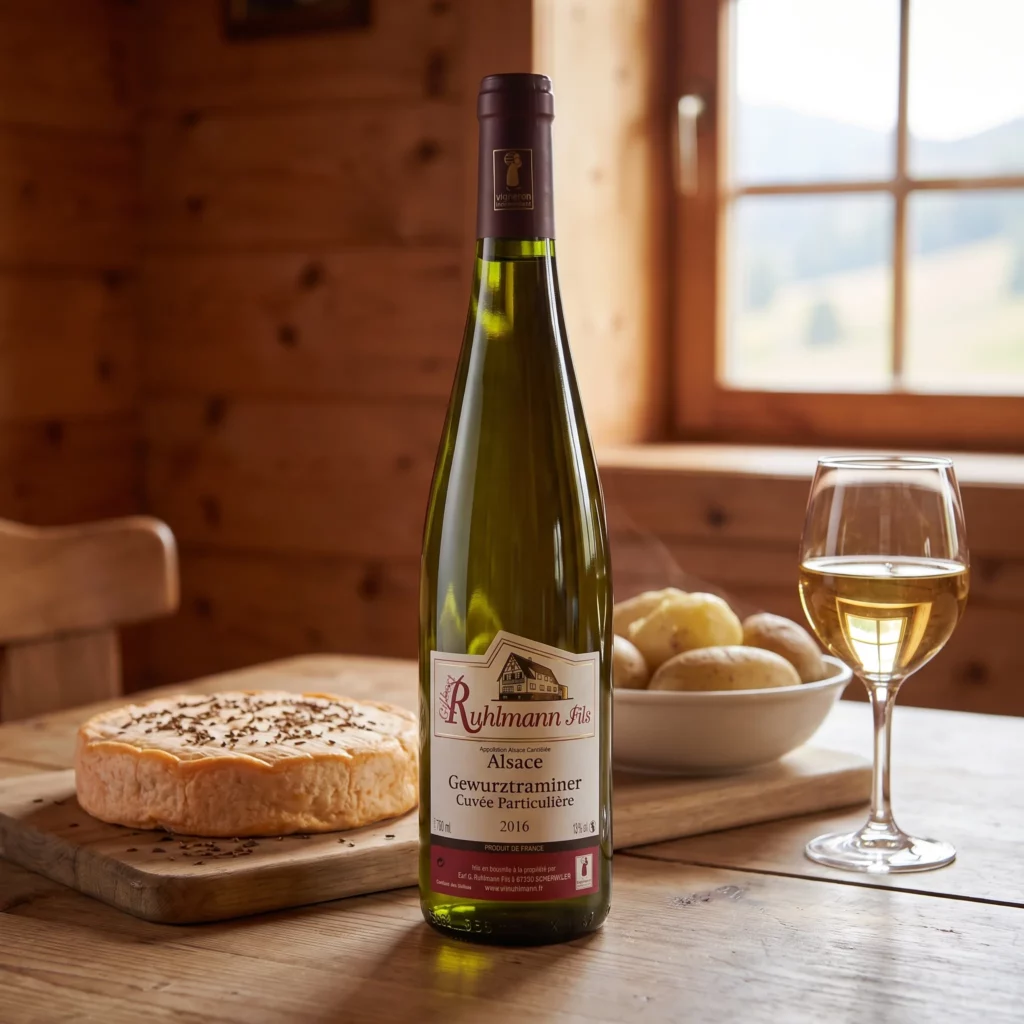
- Munster: the classic is Gewurztraminer. Its spicy aromas and roundness stand up to the character of Munster. With cumin Munster, our sweeter Gewurztraminer Cuvée Particulière is even more indulgent.
- Hard cheeses (Comté, Mimolette): our Grand Cru Frankstein, round and mineral.
- Brie, Camembert: stay with the Rittersberg Pinot Noir from the main course.
- Blue cheeses: a sweet wine, such as the Riesling Vendanges Tardives. The sweet and salty contrast is irresistible.
- Goat’s cheese: a dry Riesling, such as the Riesling Scherwiller.
Dessert: Yule log, kougelhopf and bredele
Dessert is the trickiest moment for wine, because the sugar on the plate overwhelms wines that are too dry. The rule is simple: the wine should be at least as sweet as the dessert.
- A red berry Yule log: the Crémant Rosé d’Alsace, light and fruity.
- A citrus Yule log, a lemon tart: the Riesling Vendanges Tardives, whose acidity answers that of the lemon.
- A dessert with pear or apple: the Légende d’Automne.
- Kougelhopf, bredele (Alsace Christmas biscuits), desserts with dried fruit: the Gewurztraminer Cuvée Particulière or the Légende d’Automne.
- Fresh fruit, mousses: the Muscat Vendanges Tardives.
- A chocolate Yule log: let us be honest, it is the hardest pairing, whatever the wine. If your Yule log is very chocolatey, enjoy our wines beforehand and serve coffee afterwards. With a chocolate and raspberry Yule log, the Crémant Rosé is still a good option.
In what order should you serve the wines?
The classic rule comes down to three points: from lightest to most powerful, from driest to sweetest, from white to red. It often clashes with a Christmas reality: foie gras, and its sweet wine, come at the very start of the meal.
The winemaker’s tip
If you serve a sweet wine with the foie gras, do not go back to a light, dry white afterwards, it would taste thin and sharp. Move on instead to a red with body, such as the Rittersberg Pinot Noir, or a full white such as the Riesling Vieilles Vignes. And keep the sweet wines for dessert.
How many bottles should you plan?
The question comes up every year. A 75 cl bottle gives 6 glasses of 12 cl at the table, or 7 to 8 glasses of crémant at the aperitif. For a full Christmas dinner, people generally allow half to three quarters of a bottle per adult over the whole evening. Here is a guide to help you plan:
| Course | 4 guests | 6 guests | 8 guests |
|---|---|---|---|
| Aperitif (crémant) | 1 | 1 | 2 |
| Starters (white) | 1 | 1 | 2 |
| Main course (red or white) | 1 | 2 | 2 |
| Cheese and dessert (sweet wine) | 1 | 1 | 1 |
| Total | 4 | 5 | 7 |
For four people, you will open several wines for the pleasure of variety, and there will be some left over. That is no problem: recorked and kept in the fridge, a bottle of white is still very good the next day, with the leftovers.
Serving temperatures at a glance
| Wine | Serving temperature |
|---|---|
| Crémants (brut, rosé, Extra-Brut) | 5 to 7 °C |
| Dry and medium-dry whites: Riesling, Sylvaner, Muscat, Pinot Gris, Gewurztraminer | 8 to 10 °C |
| Pinot Gris Ortenberg | 12 to 14 °C |
| Sweet and late harvest wines: Légende d’Automne, Cuvée Particulière, Riesling and Muscat Vendanges Tardives | 8 to 10 °C |
| Pinot Noir | 10 to 14 °C |
| Rittersberg Pinot Noir | 12 to 14 °C |
The Festive meal gift box: the menu, ready made
Want to keep it simple? We have put three of these wines together in the Festive meal gift box: the Crémant Extra-Brut for the aperitif, the Rittersberg Pinot Noir for the main course, and the Légende d’Automne for the foie gras or dessert. A waiter’s corkscrew comes free in every gift box. Put it on your own table, or give it to your hosts. Looking for other gift ideas? We help you choose in Giving wine for Christmas: which gift box to choose?
All our wines can be ordered from the online shop, from 3 bottles, delivered to France, Germany, Belgium and the Netherlands, usually in less than a week. In December, plan a little ahead. And if you are in the area, come and see us at the cellar: we are open 7 days a week, and tasting is still the best way to put your menu together.
Frequently asked questions
Which wines should you serve for Christmas dinner?
A crémant for the aperitif, a white for the starters (Pinot Gris for foie gras, Riesling for seafood), a fine red or a full white for the main course, and a sweet wine for dessert. With four or five bottles, you can cover the whole meal.
How many bottles of wine for a Christmas dinner?
Allow half to three quarters of a bottle per adult over the whole evening, that is about five bottles for six guests, crémant included.
Which wine with turkey or capon?
A fine red with gentle tannins, such as our Rittersberg Pinot Noir. If the poultry is served in a cream or morel sauce, a full white such as the Riesling Vieilles Vignes is often a better match.
Which wine with a Yule log?
A wine at least as sweet as the dessert: Crémant Rosé with a red berry Yule log, Riesling Vendanges Tardives with citrus, Légende d’Automne with pear or apple. With chocolate, the pairing remains difficult, whatever the wine.
Can you serve an Alsace red wine at Christmas?
Yes. Pinot Noir is the only red grape of Alsace, and our Rittersberg Pinot Noir, aged in casks, has the body you need for roast poultry or small game.
In what order should you serve the wines at Christmas?
From lightest to most powerful, and from driest to sweetest. If a sweet wine is served with the foie gras at the start of the meal, move on to a red with body rather than a dry white.
To find out more: Crémant d’Alsace: how is it made?, Alsace Gewurztraminer and our late harvest wines.