Alsace Gewurztraminer is one of those wines that leave no one indifferent. Powerful and fragrant, often associated with notes of rose, lychee and spices, it embodies a certain idea of Alsace: a region able to produce expressive white wines for fine dining, with real personality. But behind this image of an “aromatic” wine, there are in fact several styles of Gewurztraminer, very different interpretations depending on the terroir, the vintage, the ripeness sought and the winemaking choices.
Origins and history of Alsace Gewurztraminer
Where does Gewurztraminer come from? (Traminer, “gewurz”, lineage)
The word Gewurztraminer can be read as a clue. “Traminer” refers to a family of historic grape varieties from Central Europe, and “Gewürz” means “spice” or “aromatic” in German: in other words, an “aromatic Traminer”. It is a way of saying that Gewurztraminer is a particularly expressive version, marked by an intense olfactory signature.
This grape variety is known for its distinctive aromatic profile and for its ability to produce wines ranging from dry versions (rarer, but sought after) to medium-sweet wines, and on to the great sweet wines from very ripe harvests. It is precisely this range that explains why it is sometimes misunderstood: two Gewurztraminers can bear the same name and yet offer very different sensations in the glass.
Historic styles: from medium-dry to great sweet wines
For a long time, some Alsace Gewurztraminers were produced in styles with high natural richness, sometimes with noticeable sweetness. This matched consumer tastes and a traditional reading of the grape variety: its aromatic generosity naturally goes hand in hand with a sensation of roundness.
Today, expectations have changed: many consumers are looking for more freshness, balance and clarity. This has led the region to refine its styles: better control of ripeness, finer work on tension, more food-friendly profiles, sometimes drier ones, while keeping Gewurztraminer’s aromatic signature.
Our wines to discover: Gewurztraminer Vendanges Tardives · Gewurztraminer Cuvée Particulière · Gewurztraminer
The grape and the vine: understanding Gewurztraminer in the vineyard
Alsace terroirs: different styles of Gewurztraminer
Alsace has a mosaic of terroirs that strongly influence the final style. Gewurztraminer can be sumptuous on many soils, but the sensation in the glass changes depending on whether you are looking for:
- a floral, airy expression,
- a spicy, structured expression,
- or a full, rich expression, leaning towards sweetness.
A few useful pointers:
- On terroirs capable of providing structure, Gewurztraminer can gain depth and length.
- On terroirs that favour freshness, it can seem tauter, cleaner, sometimes “drier” in perception.
- On terroirs that favour ripeness, it can develop more candied notes, a broader texture and more obvious sweetness if it is retained.
This point is essential for the reader: Gewurztraminer is not a “monolithic” wine. The terroir adjusts the balance between alcohol, sugar, acidity and aromatic intensity.
Ripeness and harvest: the heart of the style
If there is one thing to remember, it is this: the style of a Gewurztraminer is decided at harvest.
The grapes can reach a high sugar content. This naturally gives:
- more potential alcohol,
- more roundness,
- more aromatic expression,
- but also a risk: losing the sensation of freshness if ripeness goes beyond the desired point of balance.
The aim is therefore to harvest at the moment when:
- the aromatics are fully developed (floral typicity, spices),
- the skin and pulp express complete ripeness,
- without tipping over into an overly heavy profile, dominated by alcoholic warmth or excessive sweetness.
A Gewurztraminer can be spectacular… but it can also become tiring if the balance is not mastered. That is the paradox of this grape variety: its intensity is its strength, and also its main pitfall.
Frequently asked questions
Is Gewurztraminer sweet?
Gewurztraminer is not always sweet. Depending on how it is made, it can be dry, medium-dry or medium-sweet. However, this grape variety is known for its very expressive aromas of lychee, rose and spices, which can give an impression of sweetness even when the wine contains little residual sugar. In Alsace, some Gewurztraminers are indeed richer and slightly sweet, while others offer a drier, more balanced profile.
What to eat with a Gewurztraminer?
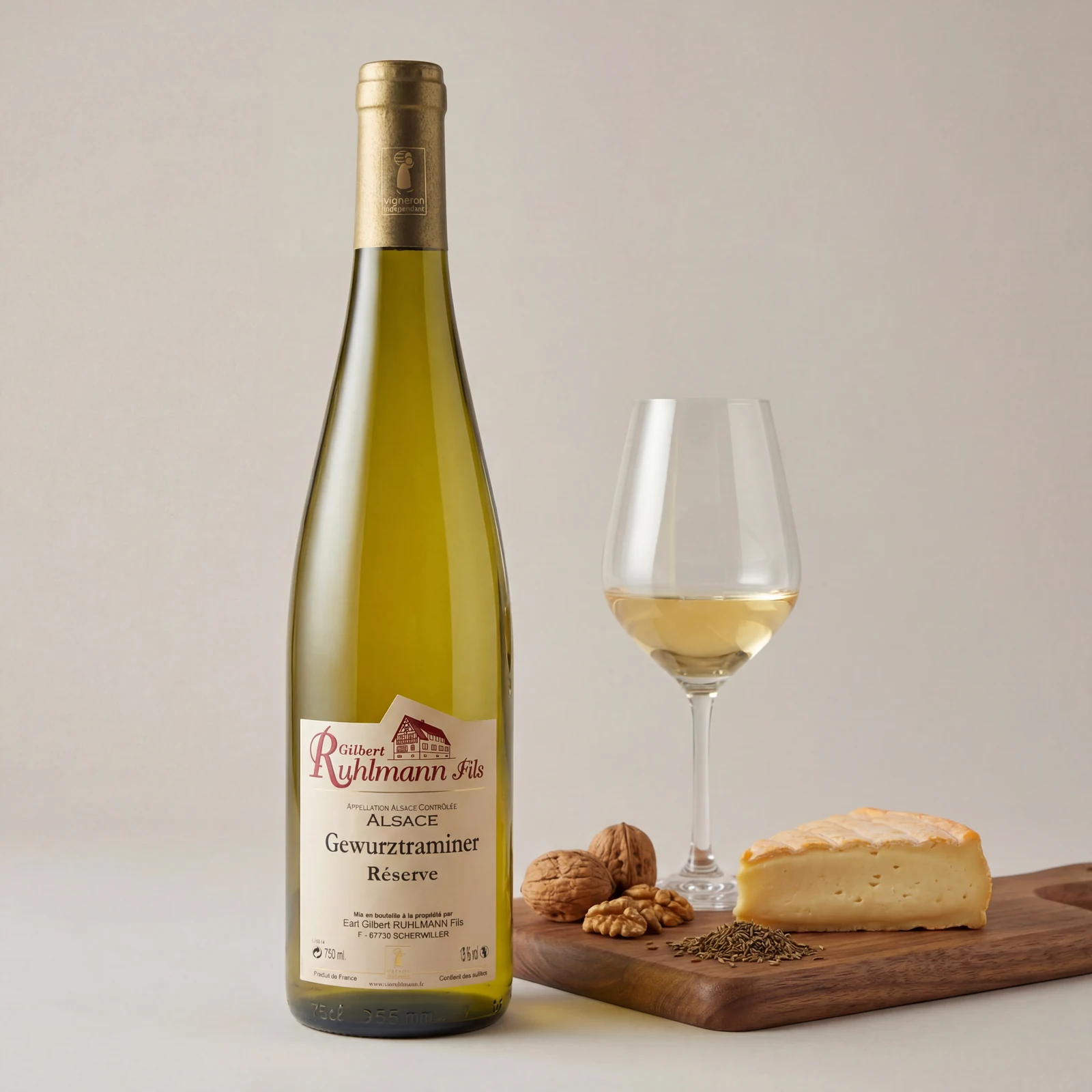
Gewurztraminer goes particularly well with dishes with strong, spicy flavours. It is a wonderful match for Asian cuisine (Thai, Indian or Chinese), foie gras, strong cheeses such as Munster, and sweet-and-savoury dishes. Its intense aromas of exotic fruit, rose and spices also make it an excellent choice with fruit desserts, especially those made with mango, lychee or apricot.
In which regions is Gewurztraminer found?
Gewurztraminer is grown mainly in Alsace, where it produces aromatic wines with notes of lychee, rose and spices. It is also found in other wine regions around the world, notably in Germany, Italy (Alto Adige) and Austria, as well as in the United States, New Zealand and Australia. However, Alsace remains the benchmark region for Gewurztraminer wines, thanks to its climate and terroirs, which are particularly well suited to this emblematic grape variety.