Riesling is the most widely planted grape variety in Alsace: around 3,500 hectares, nearly 23% of the vineyard area. It is often nicknamed “the king of grape varieties”, in Alsace as well as across the Rhine. But a nickname is not proof. Gewurztraminer is more recognisable, Pinot Blanc covers almost as much ground, and Riesling remains one of the hardest to understand for beginners.
Why would Riesling be the king of Alsace grape varieties?
Riesling owes its nickname to three things: its position as the leading grape variety in Alsace by area, its ability to faithfully express the soil it grows in, and its ageing potential, which is rare among white wines. The expression is not originally Alsatian: it comes from the Rhine valley, where Riesling has been considered the benchmark great white since the 19th century.
The leading grape variety in Alsace by area
With around 3,500 hectares out of a vineyard area of some 15,500, nearly one Alsace vine in four is Riesling. This is a recent reversal: in 1969, it covered only 1,199 hectares, or 12% of the vineyard area. It yields little, ripens late and needs well-exposed hillsides — three reasons why 19th-century winegrowers planted it only sparingly. The region’s move upmarket did the rest.
| Grape variety | Area | Share of the vineyard |
|---|---|---|
| Riesling | 3,501 ha | 22.6% |
| Pinot Blanc / Auxerrois | 3,412 ha | 22.0% |
| Gewurztraminer | 3,209 ha | 20.7% |
| Pinot Gris | 2,463 ha | 15.9% |
| Pinot Noir | 1,653 ha | 10.7% |
| Sylvaner | 1,194 ha | 7.7% |
| Muscat | ≈ 351 ha | ≈ 2.3% |
Three key dates
- 1945 — creation of the Alsace designation of origin (AOC in 1962).
- 1971 — official definition of grape variety names: the word “Riesling” becomes a regulated term. This is the great Alsace particularity: elsewhere in France, wines are named after the place; here, they are named after the grape.
- 1984 — the Vendanges Tardives and Sélection de Grains Nobles designations are regulated by decree.
Our wines to discover: Riesling · Riesling Vieilles Vignes · Riesling Scherwiller · Rittersberg Riesling · Riesling Vendanges Tardives · Riesling Sélection Grains Nobles
Riesling, Gewurztraminer, Pinot Gris: how to tell them apart?
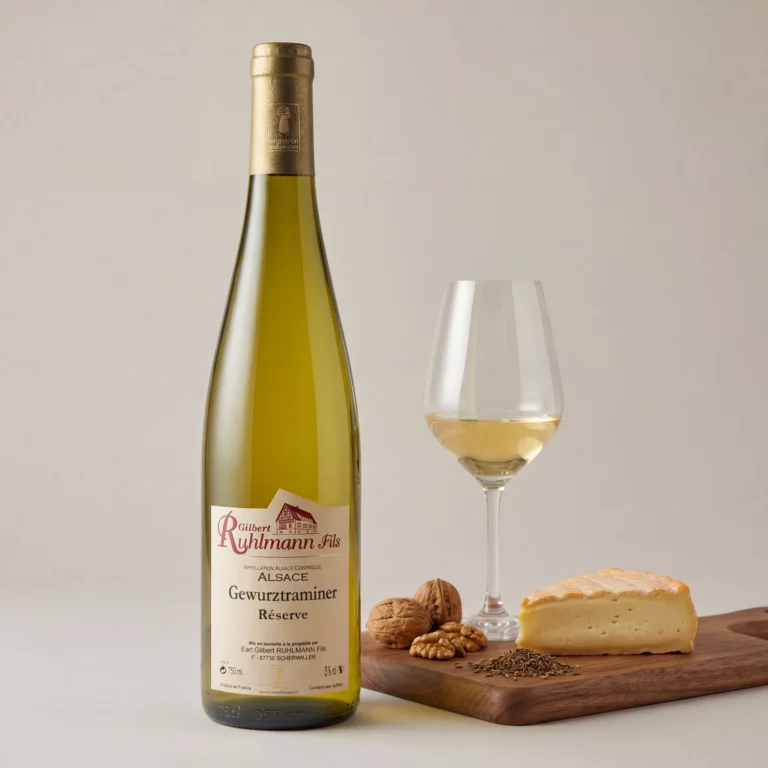
Riesling is recognisable by its acidity: it is the most taut and straight of the great Alsace whites. Gewurztraminer does the opposite: aromatic power, roundness, low acidity. Pinot Gris sits in between, with more richness and smoky notes.
| Criterion | Riesling | Gewurztraminer | Pinot Gris |
|---|---|---|---|
| Acidity | High | Low | Medium |
| Dominant aromas | Lemon, grapefruit, white flowers, stone | Rose, lychee, spices | Yellow fruit, smoke, undergrowth |
| Body | Vertical, taut | Full, opulent | Rich, structured |
| Main style | Dry | Dry to medium-sweet | Dry to medium-dry |
| Ageing potential | Very high | High | High |
| Typical pairing | Oysters, choucroute | Munster, spicy food | Roast poultry, mushrooms |
In a blind tasting, the most reliable approach comes down to three steps: look for acidity on the finish, look for citrus rather than exotic fruit, and check the colour (Riesling stays pale and bright where Pinot Gris quickly turns golden).
What does an Alsace Riesling taste like?
A dry Alsace Riesling offers a nose of citrus fruit (lemon, grapefruit), white flowers and white-fleshed fruit, extended on the palate by lively acidity and a mineral, saline finish. It is a vertical wine: it builds in tension rather than spreading out.
In a two- or three-year-old wine, the register is clear: lemon and lime, grapefruit, sometimes lemongrass, acacia and linden, vineyard peach and pear.
Minerality: where does it really come from?
Minerality is not a direct transfer of minerals from the soil to the wine — this appealing idea is physiologically wrong. What we call minerality is a cluster of sensations: a certain type of acidity, salinity on the finish, light sulphurous aromas, a texture that gently “grips”.
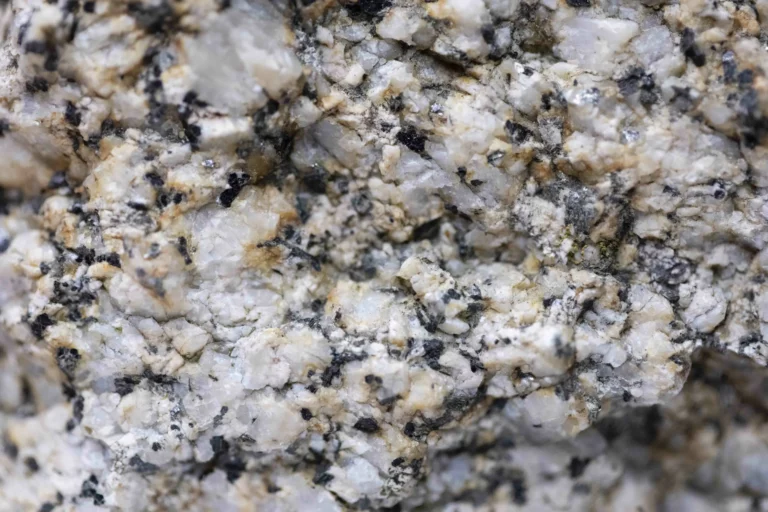
The soil contributes indirectly, through the way it manages water. Fast-draining granite constrains the vine: the grapes ripen with less water, acidity is preserved and the finish becomes sharp. Deeper alluvial soil produces broader wines. We have devoted a whole article to the question: Which soil for the Alsace vineyard?
The “petrol” note: fault or signature?
The petrol or kerosene note of Rieslings is a signature of the grape variety, not a fault.
Strong sun exposure, water stress, low yields and above all time spent in the bottle encourage it to appear. You will therefore rarely find it in a two-year-old wine, and almost always in a ten-year-old one. If you do not like it, drink your dry Rieslings within their first five years; if you are looking for it, forget a bottle in the cellar for ten years.
Scherwiller, the only village in Alsace where Riesling reigns alone
Scherwiller is one of the thirteen additional geographical designations of the AOC Alsace, and the only one reserved exclusively for Riesling. No other grape variety can claim this name on a label. This is not a marketing argument: it is written into the appellation’s specifications. If Riesling is king anywhere, it is here.
These communal designations form an intermediate level between the generic AOC Alsace and the 51 Grands Crus, with stricter production rules in a more narrowly defined area.
Two soils, two Rieslings
The Scherwiller vineyard rests on two opposing formations.
- The alluvium of the Giessen — over thousands of years, the torrent flowing down from the Val de Villé deposited a fan of gravel and silty sand. Free-draining soil, quick to warm up in spring, early ripening: crunchy, citrus-driven Rieslings that are immediately approachable. This is the birthplace of our Scherwiller, from vines 25 to 35 years old.
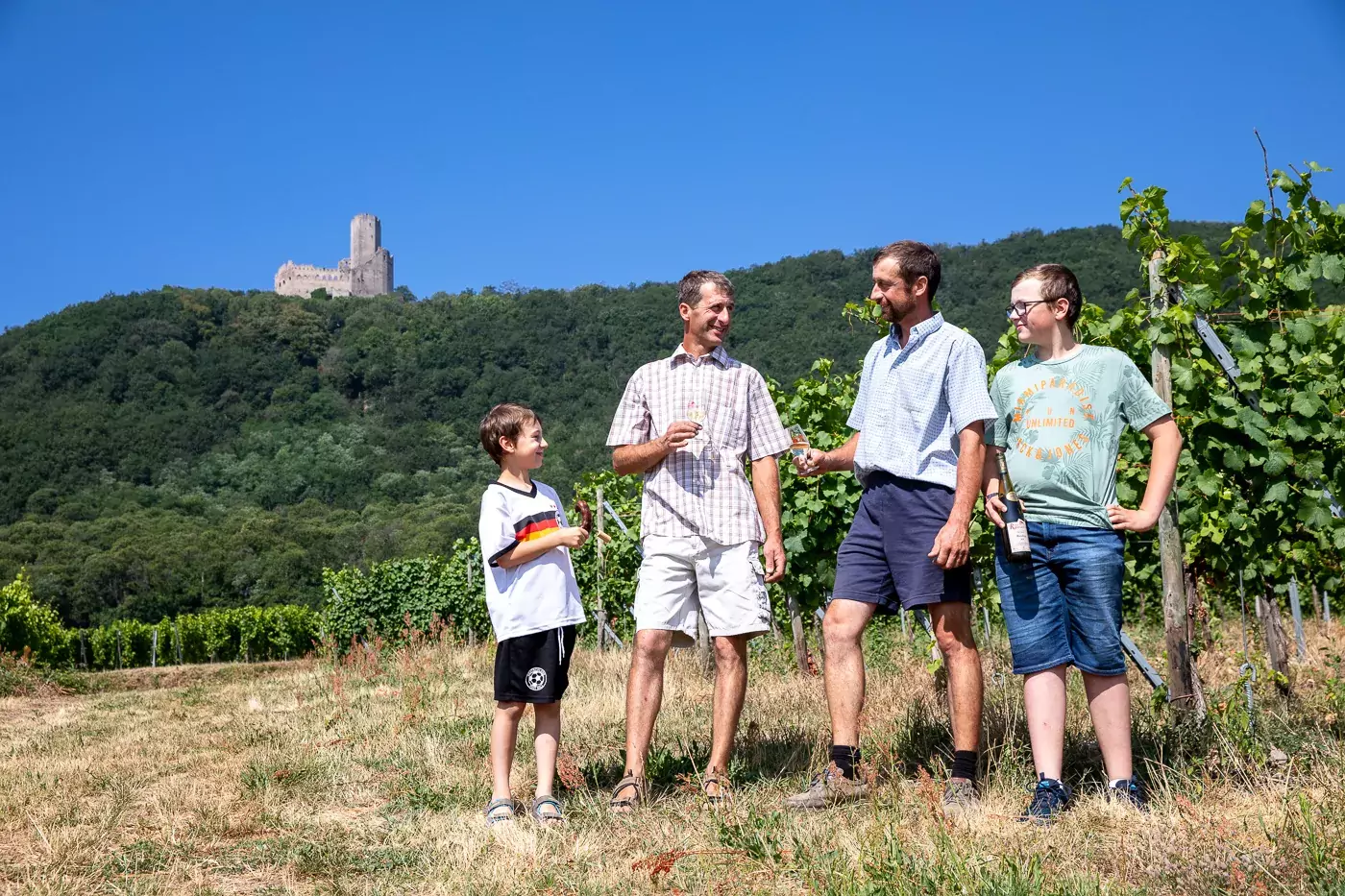
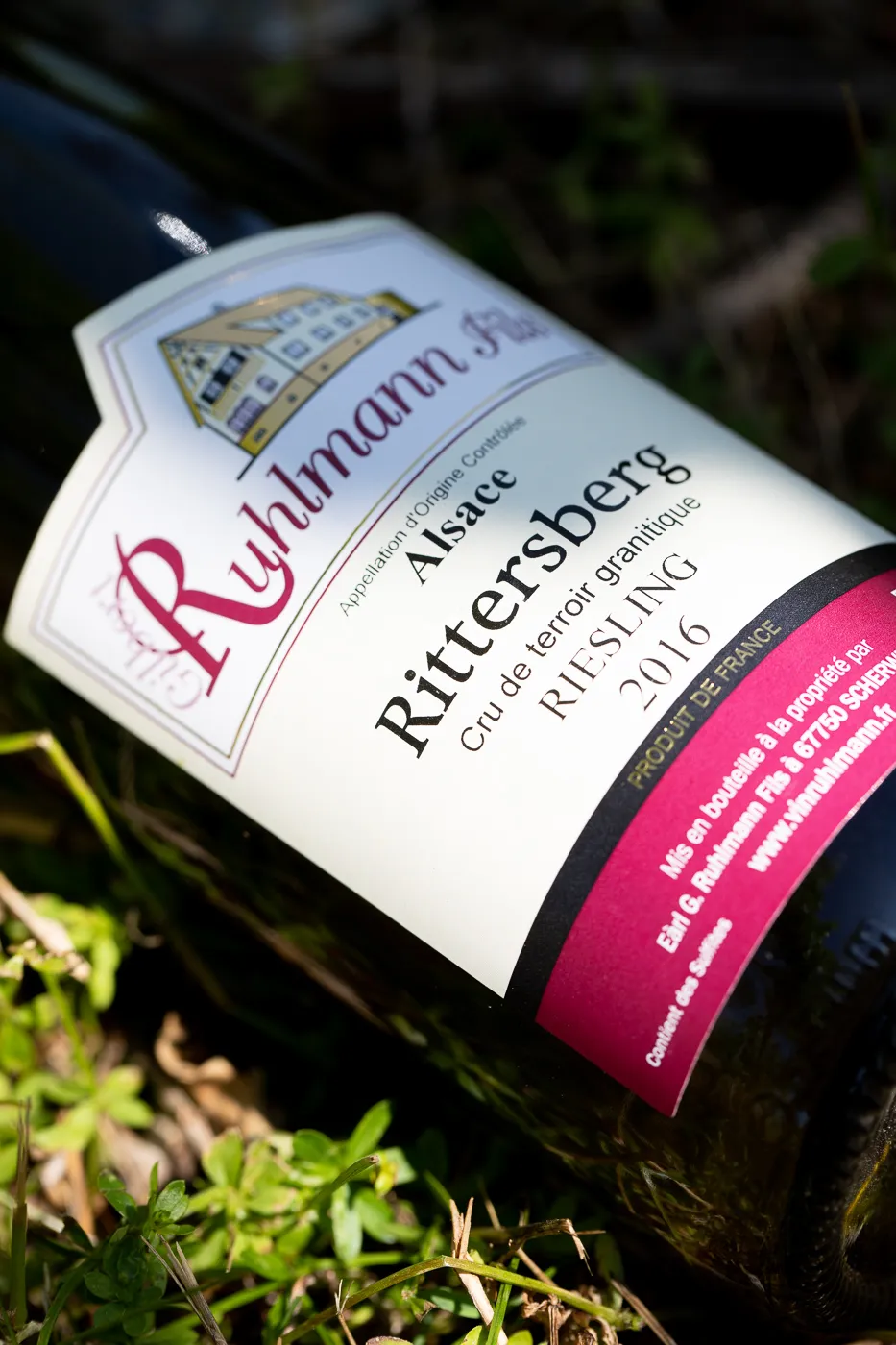
- The granite of the Rittersberg — a hillside facing south/south-east, at the foot of Ortenbourg castle, on two-mica granite. Extreme drainage, poor soil, constrained vines: straighter, more saline wines, with that note of acacia blossom that comes back every year in our Rittersberg.
Also worth discovering: our page Scherwiller, Riesling capital and all our terroir wines.
What about the Grands Crus?
Riesling is permitted in almost all of the 51 Alsace Grands Crus, alongside Gewurztraminer, Pinot Gris and Muscat. It finds its longest-lived expressions there. The Grand Cru closest to Scherwiller is Frankstein, on granite, straddling Dambach-la-Ville and Scherwiller; there we produce a Grand Cru Frankstein from Pinot Gris.
What to eat with an Alsace Riesling?
Dry Riesling goes well with seafood, fish, poultry in cream sauce, choucroute, goat’s cheeses and Asian cuisine. Its acidity cuts through fat, its minerality echoes iodine, and its aromatic restraint makes it more versatile than most whites. In its sweet versions, it moves on to foie gras and fruit desserts.
- Alsace classics — choucroute garnie (the wine’s acidity answers that of the cabbage), baeckeoffe, flammekueche, vol-au-vent. Serve at the table the same cuvée you used in the kitchen.
- Fish, shellfish and seafood — when dry, it is hard to beat. Oysters, langoustines, lobster, sole, sea bass, Rhine pike-perch, smoked fish, sushi. The salinity of the finish extends the iodine instead of clashing with it.
- Poultry, white meats and cheeses — roast chicken, guinea fowl, veal, pork: it works as soon as there is no brown sauce. It is also one of the few whites that can stand up to a full cheese board — goat’s cheeses, young Comté, hard cheeses. With Munster, Gewurztraminer is still the better match.
- World cuisines — this is the unexpected pairing. With a Thai curry, pad thai, Peking duck or tandoori, its freshness soothes the chilli where a red wine would amplify it.
- In its sweet version — foie gras, blue cheeses, lemon tart, tarte tatin, apricot desserts. Avoid chocolate.
| Dish | Style | Our cuvée |
|---|---|---|
| Oysters, shellfish | Dry, taut, mineral | Rittersberg Riesling |
| Grilled fish, sushi | Dry, fruity | Scherwiller |
| Choucroute, flammekueche | Dry, straightforward | Riesling |
| Lobster, fish in sauce… | Medium-dry, full | Vieilles Vignes |
| Spicy Asian cuisine | Medium-dry | Vieilles Vignes |
| Goat’s cheeses, hard cheeses | Dry | Scherwiller |
| Foie gras, blue cheeses | Sweet | Vendanges Tardives |
| Fruit desserts, lemon tart | Lusciously sweet | Sélection de Grains Nobles |
How to serve and store a Riesling?
Serve an Alsace Riesling at between 8 and 10 °C, in a sufficiently large white wine glass, and store the bottles lying down, away from light, at between 10 and 14 °C. Too cold, the wine closes up; too warm, the alcohol dominates and the acidity seems harsh.
The most common mistake: taking the bottle out of the fridge at 4 °C and serving it straight away. At that temperature, the aromas are numbed.
- Chill — about two hours in the fridge, or twenty minutes in a bucket of iced water with a little salt.
- Take it out before serving — leave the bottle at room temperature for ten minutes.
- Choose the glass — a white wine glass with an open bowl, never a flute: it needs surface area to release its citrus notes.
- Serve — fill the glass a third full, no more.
- Let it evolve — with a terroir cuvée or a wine more than five years old, wait ten minutes in the glass: the minerality unfolds as it warms up.
| Cuvée | Serving temperature | Recommended ageing |
|---|---|---|
| Riesling | 8 – 10 °C | 3 to 4 years |
| Scherwiller | 8 – 10 °C | 3 to 5 years |
| Rittersberg | 10 – 12 °C | 3 to 5 years |
| Vieilles Vignes | 8 – 10 °C | 3 to 5 years |
| Vendanges Tardives | 8 – 10 °C | 3 to 12 years |
| Sélection de Grains Nobles | 8 – 10 °C | up to 15 years |
For storage: bottles lying down, between 10 and 14 °C with as little variation as possible, away from light. An opened bottle keeps for a few days in the fridge, re-corked.
Frequently asked questions about Alsace Riesling
Why is Riesling called the king of grape varieties?
Because it combines three qualities that are rare in a white wine: it faithfully expresses the soil it grows in, it ages for a long time thanks to its high acidity, and it goes with a very wide range of dishes. In Alsace, it is also the most widely planted grape variety, with around 3,500 hectares, or nearly 23% of the vineyard area. The expression comes from the Rhine valley, where Riesling has been regarded as the benchmark great white since the 19th century.
Is Riesling a dry wine?
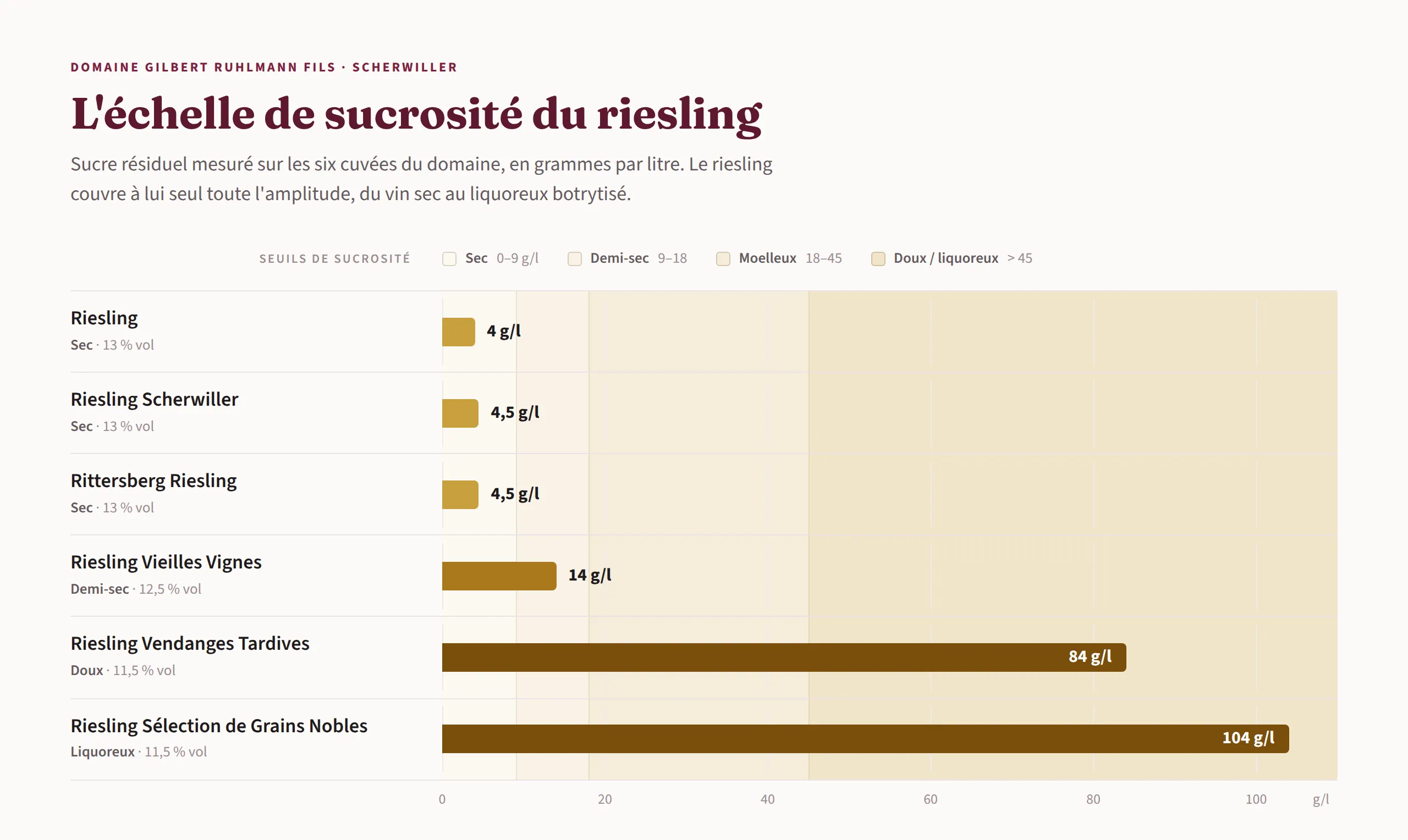
Yes, in Alsace Riesling is a dry white wine in the vast majority of cases, generally with less than 6 g/l of residual sugar. Medium-sweet and lusciously sweet versions do exist, but they must bear the words Vendanges Tardives or Sélection de Grains Nobles on the label.
What is the difference between a Riesling and a Gewurztraminer?
Riesling is a taut, acidic and mineral wine, with aromas of citrus fruit and white flowers. Gewurztraminer is its opposite: powerful, round, low in acidity, with aromas of rose, lychee and spices. Riesling goes with seafood and fish; Gewurztraminer with Munster and spicy cuisine.
How long can you keep a bottle of Riesling?
From 3 to 5 years for an entry-level or mid-range dry wine, 3 to 12 years for Vendanges Tardives, and up to 15 years for a Sélection de Grains Nobles. Great Grand Cru Rieslings can last more than twenty years. The grape’s high acidity acts as a natural preservative.