
Foie gras is often the first big moment of a festive meal. It is also when the same question comes up every year: “What do we serve with it?” Sweet or dry, Pinot Gris or Gewurztraminer, late harvest or not? The good news is that in Alsace, foie gras and wine have known each other for a long time, and there is not just one right answer. There are several. It all depends on how you prepare your foie gras, what you serve with it, and where it sits in the menu.
The essentials in 30 seconds
- Mi-cuit foie gras or terrine: a medium-dry Pinot Gris to keep things fresh, or our Légende d’Automne if you like a sweet pairing.
- Pan-seared foie gras: the Pinot Gris Ortenberg, fuller-bodied, served slightly less cold.
- With chutney, figs or gingerbread: a sweeter wine, such as the Gewurztraminer Cuvée Particulière or the Riesling Vendanges Tardives.
- Serving: between 8 and 10 °C (12 to 14 °C for the Ortenberg), in a white wine glass rather than a flute.
Sweet or dry: two schools of thought
There are two ways to pair foie gras, and each has its followers around the table.
The sweet pairing is the best known. The sweetness of the wine echoes the melting texture of the foie gras, and the whole is round, indulgent, almost like dessert. It is the pairing for big tables and long meals. Its only drawback: served at the very start of the meal, a very sweet wine can tire the palate before the main course.
The medium-dry pairing relies on freshness. A less sweet wine with good acidity cuts through the richness of the foie gras and makes you want the next bite. This is the option we recommend when foie gras opens a generous meal, or when some of your guests are not fond of sweet wines.
Between the two, Alsace has a real advantage: its Pinot Gris and Gewurztraminer can be round without being heavy. It is no coincidence that Strasbourg has been famous for its foie gras since the 18th century: the region has always had the right wines close at hand.
The winemaker’s tip
Not sure yet who will be at the table? Go for the Pinot Gris. It is round enough for foie gras and fresh enough to please those who avoid sweet wines. It is the choice that suits everyone, and it moves on easily to the rest of the meal.
With mi-cuit foie gras or a terrine
This is the most common foie gras at Christmas: as a terrine or mi-cuit, served chilled with a few slices of toast. Its texture is melting and its taste more delicate than when pan-seared. It needs a round wine that does not take over.
Our Pinot Gris: round, fruity, slightly smoky
It used to be called Tokay d’Alsace. Our Pinot Gris is a medium-dry wine with aromas of pear and peach, and the light smoky notes typical of the grape. On the palate it is round and well structured, with a lovely length. It goes with foie gras without masking it, and stays fresh enough that you still want a glass when the main course arrives.
Légende d’Automne: the indulgent version
If your family leans towards the “sweet pairing”, serve the Légende d’Automne. It is also a Pinot Gris, but made from overripe grapes. We created this cuvée at the estate in 1997, halfway between a classic wine and a late harvest, and you will recognise it at once by its blue bottle. On the nose, smoky notes, hazelnut and a touch of violet. On the palate, a round sweetness carried by real body. With mi-cuit foie gras, it is the pairing for special occasions.
With pan-seared foie gras
Pan-seared, foie gras completely changes character. It arrives hot, caramelised on the outside, more powerful, often with a sauce or roasted fruit. A light wine disappears next to it. It needs some weight.
Our answer: the Pinot Gris Ortenberg. It comes from the Ortenberg lieu-dit in Scherwiller, from decomposed granite soils facing due east. Its colour is golden and bright, its nose mixes ripe fruit, smoky notes and gentle spices, and its palate is full and silky, held together by a real minerality that keeps it fresh. With hot foie gras, it is exactly what you need.
One detail makes all the difference: serve it between 12 and 14 °C, slightly less cold than our other white wines. Too cold, it stays closed, and you would miss what makes it so charming.
Making pan-seared foie gras with apples or grapes? The Riesling Vendanges Tardives is a beautiful option. Its sweetness is balanced by the natural acidity of Riesling, which avoids the “too sweet” effect sometimes held against dessert wines.
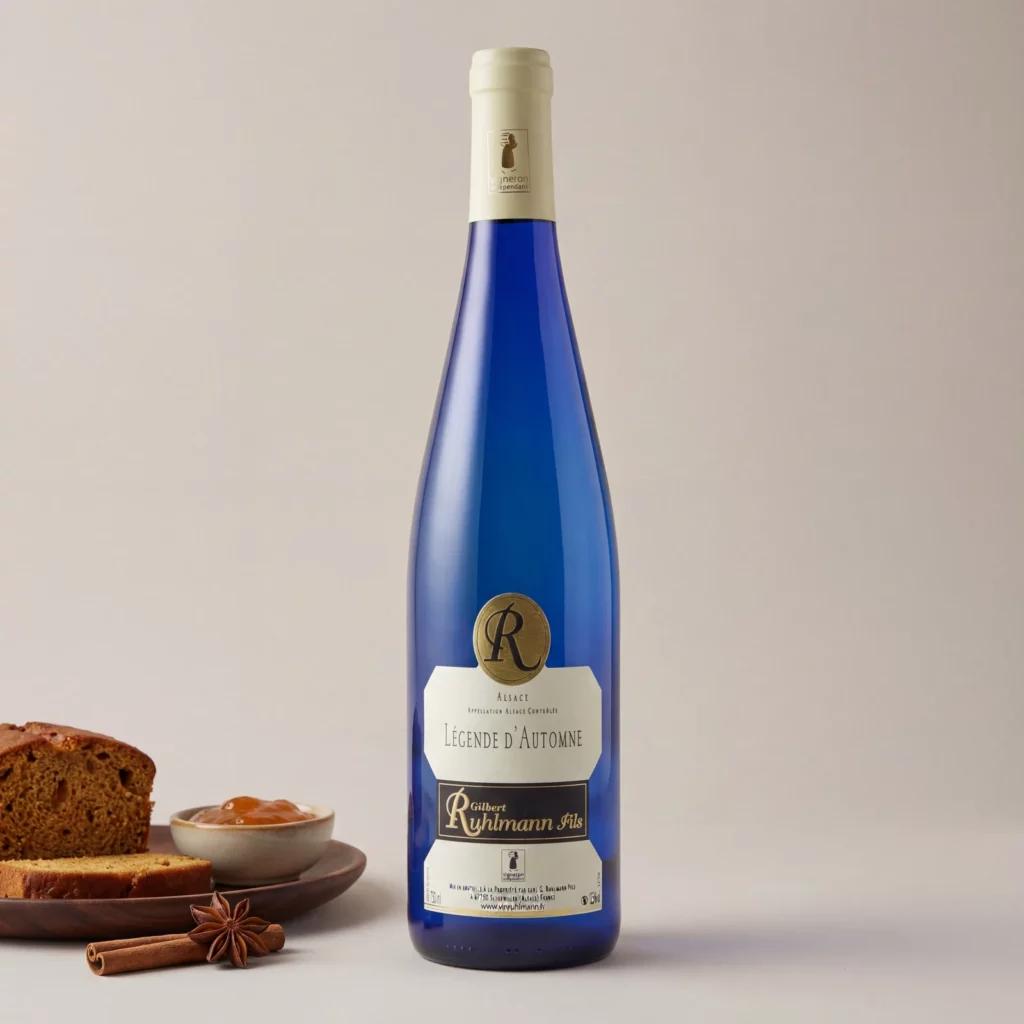
With chutney, figs or gingerbread
As soon as there is something sweet on the plate, the wine has to follow. Onion confit, fig chutney, apple compote, gingerbread: next to these, a wine that is too dry tastes sharp and thin. This is the time to bring out the sweeter wines.
Gewurztraminer Cuvée Particulière
Our Gewurztraminer Cuvée Particulière comes from plots we select for this cuvée. It is a powerful sweet wine, with lychee and exotic spices on the nose and a velvety palate. With foie gras and chutney, its spicy notes make the link with the gingerbread. A very Alsatian pairing, and a very Christmassy one.
Late harvest wines
For an exceptional meal, Vendanges Tardives (late harvest wines) remain the most luxurious pairing. It is a designation of the Alsace appellation, reserved for four grape varieties: the grapes are picked by hand, well after the usual harvest, once overripening has concentrated their sugars and aromas.
Our Riesling Vendanges Tardives offers bergamot and candied apricots, with the freshness of Riesling in the background. Our Muscat Vendanges Tardives blends fresh and candied fruit, with the indulgence typical of Muscat. It is a sweet wine, with close to 80 g/l of residual sugar, to be served in small quantities, like all late harvest wines.
What about the classic Gewurztraminer?
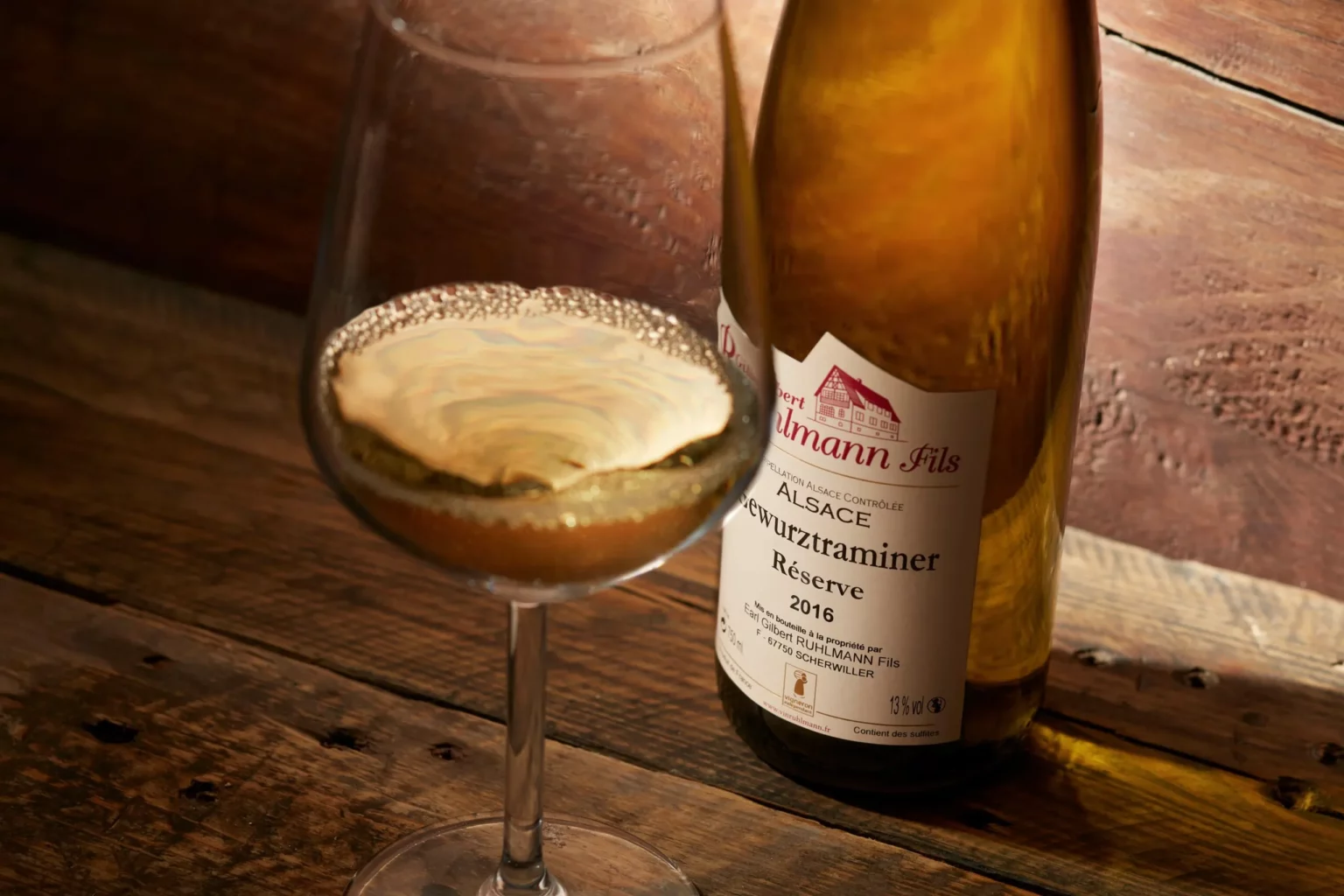
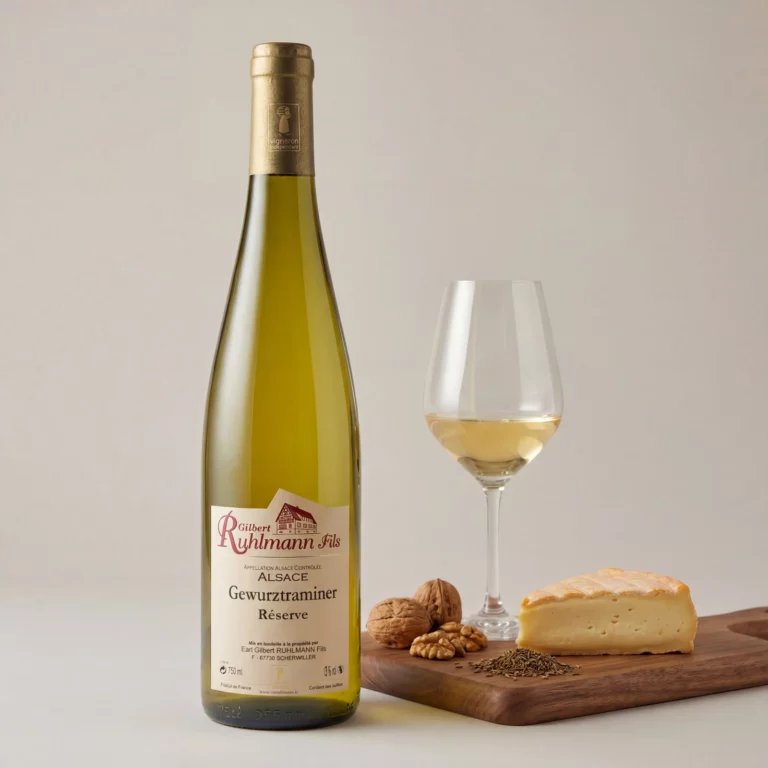
It is often paired with foie gras, and rightly so. Our Gewurztraminer, medium-dry, is very expressive: ripe exotic fruit, rose and a hint of spice on the finish. It works with classic foie gras as well as pan-seared. It is the wine to choose if you like pairings with character, and an excellent aperitif wine if the foie gras is served on small toasts.
If your guests prefer something more discreet, Pinot Gris remains more neutral. And if you would like to know this grape better, we have written a complete guide to Gewurztraminer.
In short: which wine for which foie gras?
| Your foie gras | Our advice | Why |
|---|---|---|
| Mi-cuit or terrine, plain | Pinot Gris | Round and fresh, it leaves room for the rest of the meal |
| Mi-cuit, for an indulgent pairing | Légende d’Automne | A sweet Pinot Gris, smoky and nutty |
| Pan-seared | Pinot Gris Ortenberg | Full and mineral, it stands up to hot foie gras |
| Pan-seared with apples or grapes | Riesling Vendanges Tardives | Sweetness and acidity in balance |
| With chutney, figs or gingerbread | Gewurztraminer Cuvée Particulière | Its spices echo the garnish |
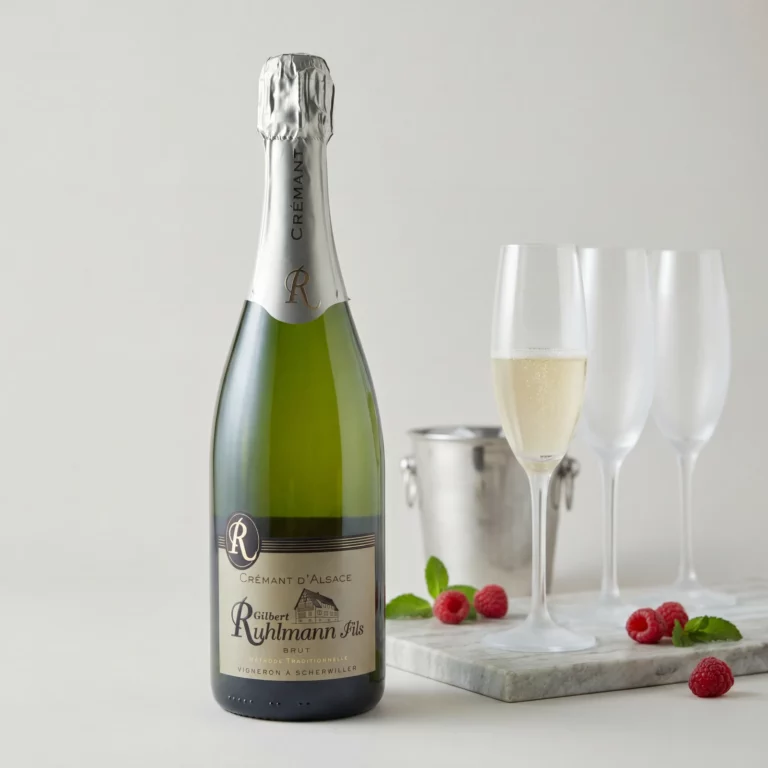
| On toast, as an aperitif | Gewurztraminer or Crémant d’Alsace | Expressive or sparkling, to open the evening |
Serving the wine with foie gras
- Temperature: between 8 and 10 °C for the Pinot Gris, the Légende d’Automne, the Gewurztraminers and the late harvest wines, between 12 and 14 °C for the Pinot Gris Ortenberg. Too cold, a sweet wine loses its aromas. Too warm, it becomes heavy.
- The glass: a classic white wine glass, filled to a third. With a sweet wine, you serve small amounts, and that is just right.
- How much: a 75 cl bottle gives 7 to 8 glasses of 10 cl, enough for the starter at a table of six.
- The foie gras itself: take it out of the fridge about fifteen minutes before serving, and slice it with a knife dipped in hot water. Slightly less cold, it shows its aromas better, and so does the wine.
Two bottles, two styles
Having people over? Open a Pinot Gris and a Légende d’Automne at the same time, and let everyone choose. You will see that the same grape can give two very different wines, and the conversation is started for the evening.
Order for the holidays
All the wines in this article can be ordered from our online shop, from 3 bottles, with delivery to France, Germany, Belgium and the Netherlands. Parcels usually arrive in less than a week, but carriers are very busy in December: better not to wait until the last minute. Nearby? Come to our cellar in Scherwiller, open 7 days a week: you can taste before you choose.
And for a complete menu, the Festive meal gift box brings together the Légende d’Automne, a Crémant Extra-Brut for the aperitif and our Rittersberg Pinot Noir for the main course. We go through the whole meal, from aperitif to dessert, in our Christmas wine guide.
Frequently asked questions
Which wine goes with foie gras?
A round white wine, medium-dry or sweet. In Alsace, Pinot Gris is the safest pairing. For a more indulgent pairing, choose a sweet wine such as the Légende d’Automne or a late harvest wine.
Does foie gras always need a sweet wine?
No. A sweet wine gives an indulgent pairing, while a medium-dry wine like our Pinot Gris keeps more freshness and leaves room for the rest of the meal. It all depends on your garnish and on where the foie gras sits in the menu.
Which wine with pan-seared foie gras?
A full, mineral white wine, such as our Pinot Gris Ortenberg, served between 12 and 14 °C. If the foie gras comes with fruit, a Riesling Vendanges Tardives works very well.
Pinot Gris or Gewurztraminer with foie gras?
Both work. Pinot Gris is more discreet, round and smoky, and pleases most people. Gewurztraminer is more aromatic and spicier, ideal with chutney, gingerbread or on toast as an aperitif.
Can you serve crémant with foie gras?
Yes, especially on toast as an aperitif: the bubbles and freshness of a Crémant d’Alsace lighten the foie gras. At the table, as a starter, a Pinot Gris remains the more comfortable choice.
At what temperature should you serve wine with foie gras?
Between 8 and 10 °C for most of our wines: Pinot Gris, Gewurztraminer, Légende d’Automne and late harvest wines. The Pinot Gris Ortenberg is served slightly less cold, between 12 and 14 °C.
To find out more: Riesling or Pinot Gris: how to choose? and our late harvest wines.