At midnight on 31 December, you need bubbles. And every year the same question comes back: does it really have to be champagne? More and more people open a crémant instead, and they are right. Crémant d’Alsace is made the same way, with the same care, for a much gentler price. We have been making ours in Scherwiller since 1984. Here is what it shares with champagne, what sets it apart, and which of our three crémants to open on New Year’s Eve.
The essentials in 30 seconds
- The same method: Crémant d’Alsace is made like champagne, with a second fermentation in the bottle. That is what gives it fine bubbles.
- For the midnight toast: our Crémant d’Alsace, a fresh and floral brut.
- For oysters and the meal: our Crémant Extra-Brut, a vintage cuvée aged 36 months on its lees.
- For smoked salmon and dessert: our Crémant Rosé d’Alsace, 100% Pinot Noir.
- How many bottles: one bottle fills 6 glasses. One for 6 people if you only toast at midnight, one for 3 if the crémant is also served as an aperitif.
Crémant and champagne: the same method
What makes a great sparkling wine is the way its bubbles are born. Champagne and Crémant d’Alsace follow the same method, the traditional method:
- A base wine: the grapes, picked by hand, are pressed as whole bunches. Their juice ferments a first time in the tank and becomes a still wine.
- The second fermentation: this wine is bottled with a little sugar and yeast. A second fermentation takes place in the closed bottle, and the gas, which cannot escape, forms the bubbles.
- Ageing on the lees: the bottles age lying down on their lees, the spent yeast. This rest refines the bubbles and brings brioche notes.
- Riddling and disgorging: the deposit is moved into the neck and expelled, then the dosage liqueur is added, which sets the style: brut, extra-brut…
So the principle is the same. What changes is the region, the grape varieties and the rules of each appellation. All the details are in our guide Crémant d’Alsace: how is it made?
What really sets them apart
| Crémant d’Alsace | Champagne | |
|---|---|---|
| Method | Traditional, second fermentation in the bottle | Traditional, second fermentation in the bottle |
| Harvest | By hand, compulsory | By hand, compulsory |
| Grape varieties | Pinot Blanc, Auxerrois, Pinot Gris, Pinot Noir, Riesling, Chardonnay | Mainly Chardonnay, Pinot Noir and Meunier |
| Minimum time before sale | 12 months after bottling, including 9 months on the lees | 15 months for a non-vintage, 36 months for a vintage |
At the estate, we go well beyond the minimum. Our crémants usually spend 18 months to 2 years on their lees, and our vintage Crémant Extra-Brut 36 months, as long as the minimum required for a vintage champagne. This long rest gives fine bubbles and the brioche notes you expect from a great festive wine.
And the price? That is often where the question arises. Our crémants cost between €12 and €15.50 a bottle. A crémant is generally much cheaper than a champagne, so you can serve bubbles from the start of the evening to the end, not just at midnight.
Crémant d’Alsace is no second choice either. Its appellation turns 50 in 2026, and it is the leading crémant in France: more than 40 million bottles sold every year, about one crémant in three.
Our three crémants for New Year’s Eve
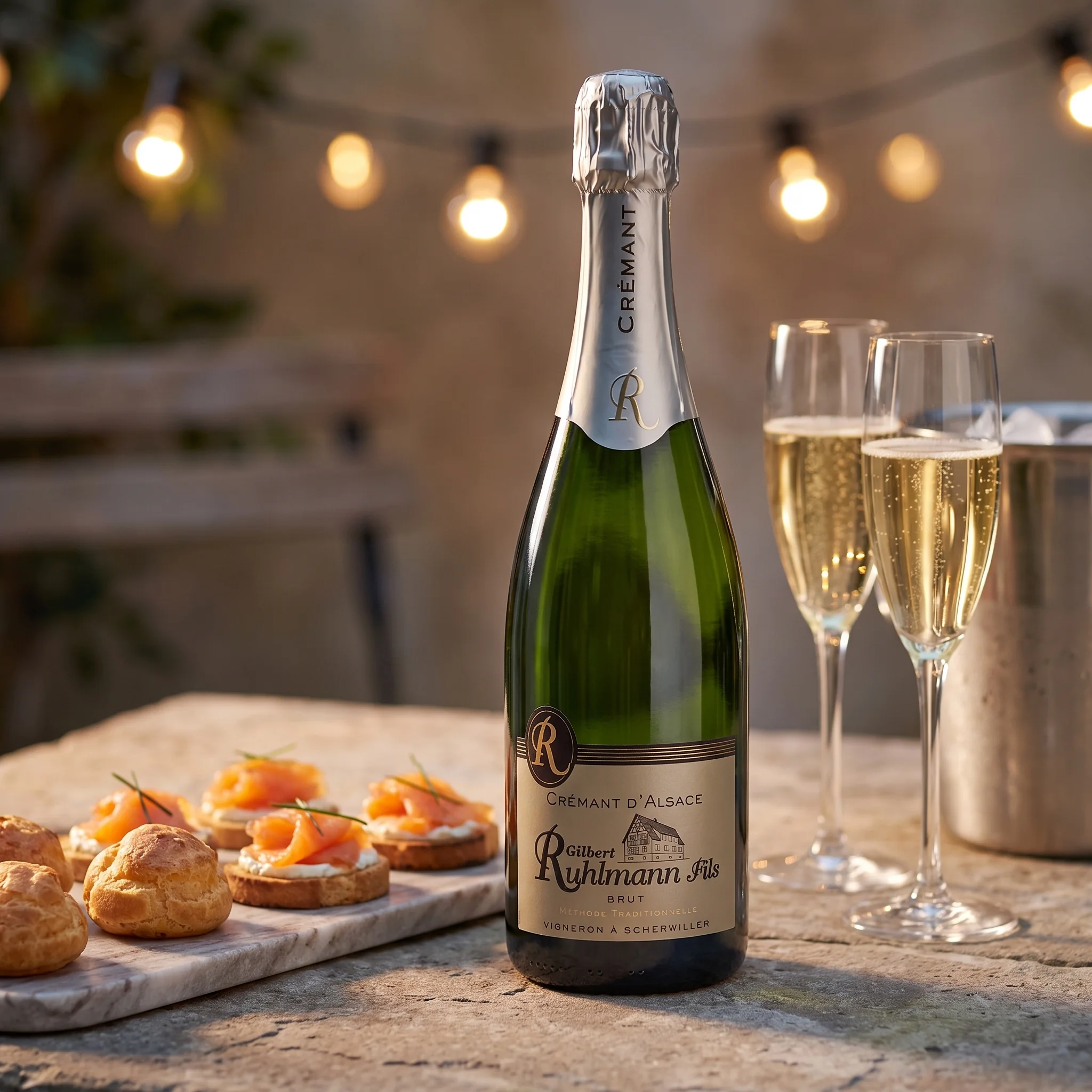
Crémant d’Alsace brut: for the midnight toast
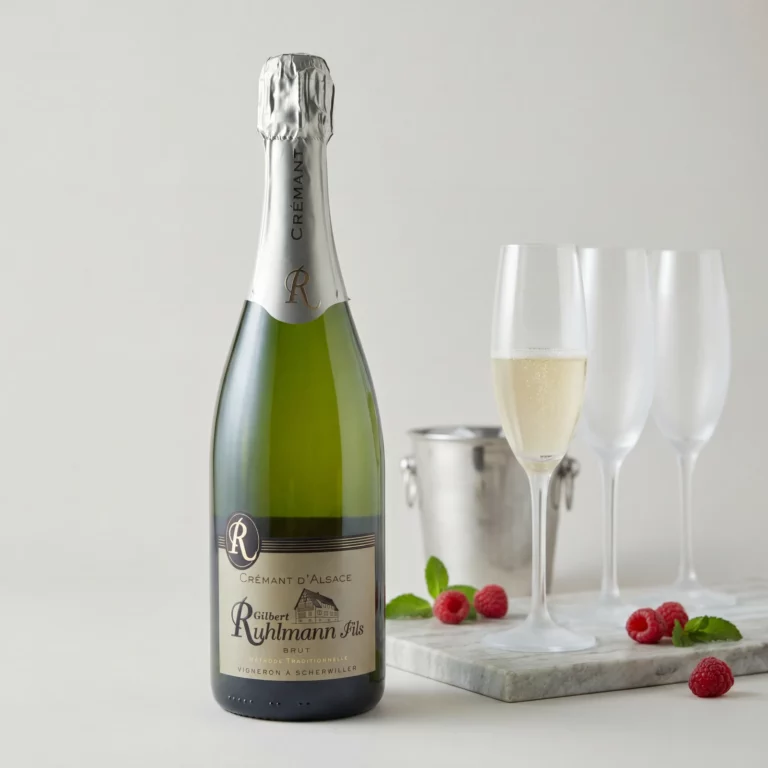
Our Crémant d’Alsace blends Pinot Blanc, Riesling and Chardonnay. It is a fresh, floral brut, with white flowers and peach and fine, lasting bubbles. Everyone likes it, which makes it the ideal bottle to open as the clock strikes twelve, or from the aperitif onwards with gougères and toasts.
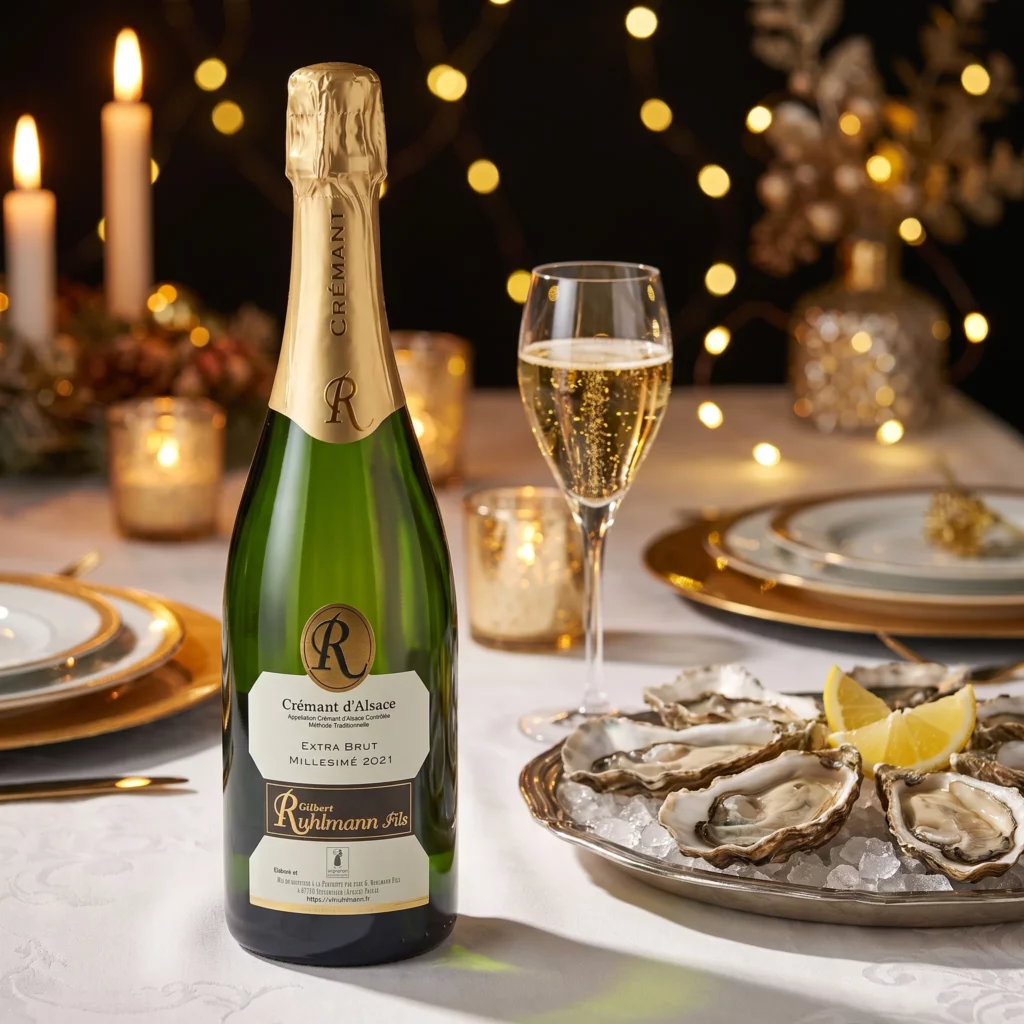
Crémant Extra-Brut: for oysters and the meal
Our Crémant Extra-Brut is our most accomplished sparkling cuvée. This vintage crémant is made from Chardonnay only, ages 36 months on its lees, and is riddled and disgorged by hand. As an extra-brut, even drier than a brut, it offers a clean, chiselled palate, with brioche, white flowers and toasty notes. This is the crémant to serve with oysters, lobster or a delicate fish.
Crémant Rosé d’Alsace: for smoked salmon and dessert
Our Crémant Rosé d’Alsace is 100% Pinot Noir, the only red grape of Alsace, pressed directly to give a salmon-pink colour. It smells of raspberry and strawberry, with delicate bubbles. It is wonderful with smoked salmon blinis, and later with a red fruit dessert.
Which crémant at which moment of the evening?
| Moment | Our crémant | Why |
|---|---|---|
| The aperitif, gougères, toasts | Crémant d’Alsace | Fresh and floral, it whets the appetite |
| Oysters and seafood | Crémant Extra-Brut | Very dry and chiselled, it matches the iodine |
| Smoked salmon, blinis | Crémant Rosé d’Alsace | Red fruit against the smokiness |
| The stroke of midnight | Crémant d’Alsace | The one everyone likes |
| A red fruit dessert | Crémant Rosé d’Alsace | Raspberry and strawberry with the fruit |
For the main course, switch to a still wine. Our pairings, from aperitif to dessert, are in Which wines for Christmas dinner?, and they work for the 31st too.
The winemaker’s tip
At midnight, everyone wants to hear the cork pop. But a cork that flies out with a bang takes some of the bubbles with it, and sometimes some wine. Hold the cork, turn the bottle gently, slightly tilted, and let the cork come out with a soft sigh. Your guests will have more bubbles in their glass. And serve it in a tulip glass rather than a very narrow flute: its aromas come through better.
How many bottles should you plan?
A 75 cl bottle fills about 6 glasses. To get it right:
| Guests | For the midnight toast | For the aperitif and midnight |
|---|---|---|
| 4 | 1 bottle | 2 bottles |
| 6 | 1 bottle | 2 bottles |
| 8 | 2 bottles | 3 bottles |
| 10 | 2 bottles | 4 bottles |
| 12 | 2 bottles | 4 bottles |
If the crémant also goes with the oysters or part of the meal, plan one bottle for two or three people. Serve it at 5 to 7 °C: a few hours in the fridge, or 20 to 30 minutes in a bucket of water and ice.
Order for New Year’s Eve
Our crémants can be ordered on our Crémants page, from 3 bottles, with delivery to France, Germany, Belgium and the Netherlands. Delivery usually takes less than a week, so allow a little extra time as the holidays approach. Would you rather come by? Our cellar in Scherwiller is open 7 days a week, and you can taste before you buy.
Oysters on the menu? Our pairings are in Which wine with oysters and seafood?
Frequently asked questions
What can I drink instead of champagne?
A crémant. It is made with the same traditional method, with a second fermentation in the bottle, usually for a much gentler price. Crémant d’Alsace is the leading crémant in France.
What is the difference between crémant and champagne?
The region, the grape varieties and the ageing rules. The method is the same. A Crémant d’Alsace can only be sold 12 months after bottling, including 9 months on the lees, a non-vintage champagne after 15 months. Our crémants usually spend 18 months to 2 years on their lees, and 36 months for the vintage Crémant Extra-Brut.
Which crémant should I choose for New Year’s Eve?
A brut for the midnight toast, like our Crémant d’Alsace. An extra-brut for oysters or the meal, like our Crémant Extra-Brut. And a rosé, like our Crémant Rosé d’Alsace, for smoked salmon or a fruit dessert.
Brut or extra-brut: what is the difference?
The sugar added after disgorging: less than 12 g per litre for a brut, 0 to 6 g for an extra-brut. Extra-brut is drier and more chiselled, brut is rounder.
At what temperature should crémant be served?
Between 5 and 7 °C. Colder, it loses its aromas. Warmer, it tastes less fresh.
How many bottles of crémant for 10 people?
Two bottles are enough for the midnight toast. Plan four if the crémant is also served as an aperitif.
To go further: Crémant d’Alsace: how is it made?