
Choucroute garnie, sauerkraut topped with sausages and smoked pork, is Alsace’s signature dish, and every winter the same question comes up: which wine goes with choucroute? In Scherwiller, the Riesling village, our answer as winemakers is simple: a dry Alsace white, with Riesling first. With fish choucroute, Riesling is still an excellent choice, as are the fine bubbles of a Crémant d’Alsace.
Why Riesling goes so well with choucroute
It is first of all a matter of acidity: the wine’s acidity echoes that of the cabbage, and it cuts through the fat of the meats, from smoked bacon to sausages. Riesling is the most taut and linear of the great Alsace whites: it refreshes the palate from one bite to the next and lightens a generous dish.
Choose it dry: with choucroute, you want freshness and precision, not sweetness. That is why we recommend our three dry Rieslings.
Our three dry Rieslings for choucroute
Our Riesling: dry and straightforward
Our Riesling is a dry white wine with a very lemony nose, nuanced with pepper and sage, carried on the palate by lively acidity. After two or three years in the cellar, mineral notes complete its aromas. It is the cuvée we recommend first for choucroute garnie, as well as for flammekueche (tarte flambée).
Riesling Scherwiller: choucroute with a Riesling from Scherwiller
Our Riesling Scherwiller comes from 25- to 35-year-old vines planted south-east of the village, on the gravels and silty sands of the Giessen alluvial fan. Scherwiller is one of the Alsace communal appellations reserved exclusively for Riesling: this is the Riesling of our village. Citrus and yellow fruit aromas, mineral touches, a fresh and crisp palate and a lemony finish: it goes as well with choucroute garnie as with fish choucroute.
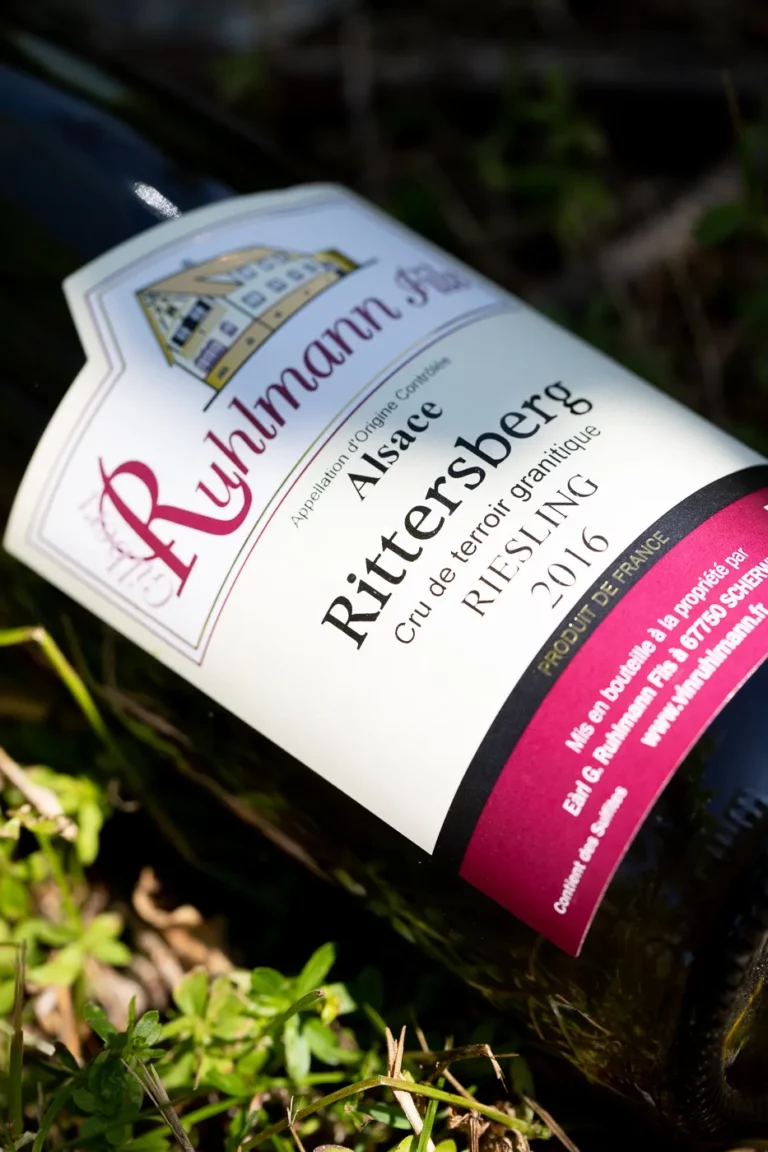
Rittersberg Riesling: a Riesling from granite
Our Rittersberg Riesling comes from the Rittersberg vineyard, on the slopes of Scherwiller below Ortenbourg Castle. The soil is a crumbly two-mica granite facing south-south-east. It gives a taut, linear Riesling: acacia blossom and mineral notes on the nose, a fresh, ample and structured palate, and a saline finish. Its structure stands up to the meats of a choucroute garnie, and its saline finish makes it very much at ease with fish.
And with fish choucroute?
Fish choucroute calls for finesse. Two families of wine suit it well: dry Rieslings and Crémant d’Alsace.
A dry Riesling
The three Rieslings above also go with fish choucroute: their acidity and citrus notes lift the fish like a squeeze of lemon. The Rittersberg Riesling and its saline finish make a particularly successful match, but our Riesling and the Riesling Scherwiller work just as well.
A Crémant d’Alsace
Crémant with fish choucroute is a typically Alsatian pairing: its fine bubbles and freshness accompany the fish without overpowering the cabbage.
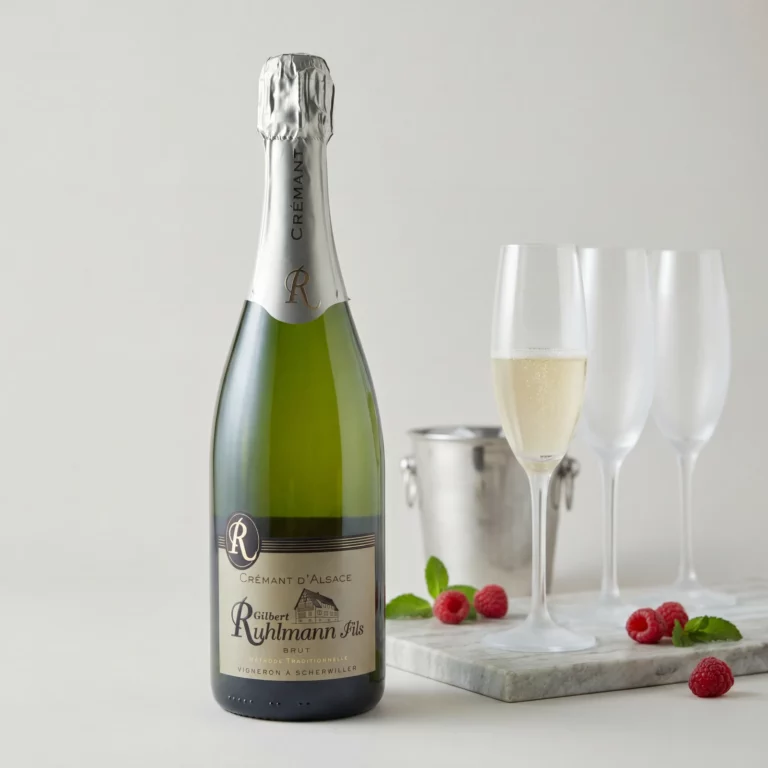
- Crémant d’Alsace (brut): floral notes of white flowers and peach, a fresh and lively palate.
- Crémant Extra-Brut: brioche, white flowers and toasty notes, even less sweet than a brut crémant.
Serve them well chilled, between 5 and 7 °C, ideally in a tulip glass.
From aperitif to dessert: a meal around choucroute
For a complete Alsatian meal, open with a Crémant d’Alsace or a Crémant Extra-Brut as an aperitif, move on to Riesling with the choucroute, then come back to bubbles with a fruit dessert: our Crémant d’Alsace is a natural match for it.
At a glance: which wine for which choucroute?
| Our cuvée | Style | Which choucroute? |
|---|---|---|
| Riesling | Dry white, lemony, lively acidity | Garnie or fish |
| Riesling Scherwiller | Dry white, citrus and yellow fruit, communal appellation | Garnie or fish |
| Rittersberg Riesling | Dry white from granite, saline finish | Garnie or fish |
| Crémant d’Alsace | Sparkling, brut | Fish, and as an aperitif |
| Crémant Extra-Brut | Sparkling, extra-brut | Fish, and as an aperitif |
Serving Riesling with choucroute
- Temperature: between 8 and 10 °C for the Rieslings, between 5 and 7 °C for the crémants. Avoid serving Riesling straight from the fridge at 4 °C: at that temperature its aromas are muted. Leave it about ten minutes at room temperature.
- Glass: a white wine glass with an open bowl, filled to one third, a tulip glass for crémant.
- How much: allow about one bottle for three guests with the main course.
- Cellaring: our Riesling keeps 3 to 4 years, the Riesling Scherwiller and the Rittersberg Riesling 3 to 5 years, lying down, between 10 and 14 °C, away from light.
Frequently asked questions
Which wine to drink with choucroute?
A dry Alsace white, preferably a Riesling: its acidity echoes that of the cabbage and cuts through the fat of the meats. With fish choucroute, a dry Riesling or a Crémant d’Alsace.
Which Riesling to choose for choucroute?
A dry Riesling. At the estate, we recommend our Riesling, dry and straightforward, the Riesling Scherwiller, from our village’s communal appellation, or the Rittersberg Riesling, from a granite vineyard in Scherwiller.
Which wine with fish choucroute?
A dry Riesling, such as the Rittersberg Riesling with its saline finish, or a crémant: the Crémant d’Alsace (brut) or the Crémant Extra-Brut.
Can you serve crémant with choucroute?
Yes, especially with fish choucroute: it is a typically Alsatian pairing. Crémant can also open the meal as an aperitif.
At what temperature should Riesling be served with choucroute?
Between 8 and 10 °C. Crémant is served cooler, between 5 and 7 °C.
To find out more: Riesling, the king of Alsace grape varieties? and Scherwiller, Riesling capital in the heart of Alsace. And to taste our Rieslings before your choucroute, our cellar in Scherwiller welcomes you 7 days a week: just let us know when you are coming.